
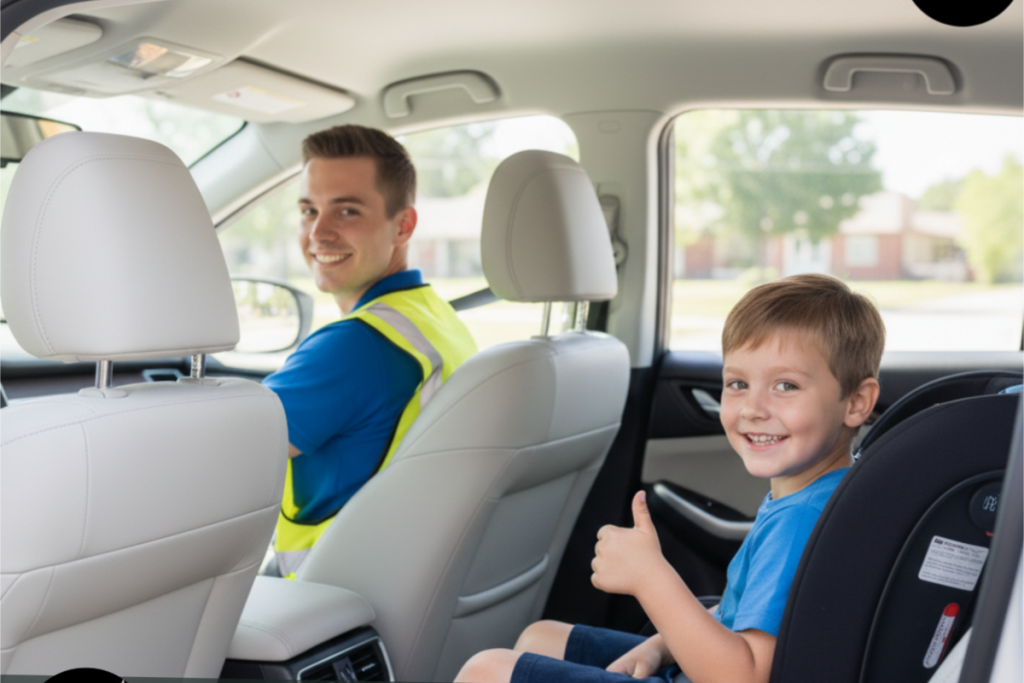
Special needs transportation services aren’t listed in parenting books, but for thousands of families, they’re as essential as IEP meetings and therapy schedules. The moment your child’s school placement extends beyond walking distance, or when behavioral challenges make standard bus routes impossible, you enter a world where transportation becomes healthcare, education support, and emotional regulation, all wrapped into one daily service.
Most parents discover this reality suddenly. Maybe it’s after an incident on a regular school bus where your autistic son was overwhelmed by noise and the driver didn’t know how to help. Or when your daughter’s wheelchair couldn’t be properly secured on standard district transportation. Perhaps it’s the therapist who gently suggests that your child’s anxiety isn’t “just” about school—it’s about the chaotic 45-minute commute that happens before learning can even begin.
The challenges mirror what families face with broader school transportation safety—the difference is that special needs students require providers who go far beyond basic safety protocols to truly understand disability-specific requirements.
Here’s what nobody tells you upfront: finding the right special needs transportation services can transform your child’s entire school experience. Not because vehicles are magical, but because when the commute feels safe and predictable, everything else becomes possible.
What Makes Special Needs Transportation Services Different from Standard School Buses
Standard school transportation operates on a one-size-fits-all model. Drivers pick up 30-50 students, follow predetermined routes, and prioritize staying on schedule above everything else. That model works beautifully for neurotypical students without physical disabilities.
It fails spectacularly for students who need something different.
Sensory environments require intentional design. Standard buses feature fluorescent lighting, vinyl seats that creak with every movement, diesel engine rumble, and the accumulated noise of dozens of conversations. For students with sensory processing differences, this isn’t just uncomfortable—it can be physically painful and emotionally overwhelming.
Quality special needs transportation services use softer lighting, maintain quieter passenger loads, and allow students to use noise-canceling headphones or other sensory tools without judgment. Drivers understand that a student covering their ears isn’t being rude. They’re regulating.
Behavioral support happens in real-time. When a student starts showing signs of distress on a standard bus—rocking, vocal stimming, trying to unbuckle—untrained drivers often interpret these behaviors as misbehavior. They might raise their voice, threaten consequences, or physically intervene in ways that escalate the situation.
Trained drivers recognize these signs as communication. They adjust their approach, lower stimulation, and use calming techniques that respect the student’s dignity. The National Association of State Directors of Pupil Transportation Services emphasizes that proper training in disability awareness and behavioral response is essential for student safety during transport, while the National Highway Traffic Safety Administration provides federal safety standards that all school transportation must meet.
Medical needs aren’t optional considerations. Students with seizure disorders, diabetes, feeding tubes, or medication schedules need drivers who understand their specific health requirements. This goes beyond “call 911 in an emergency.” It means recognizing early warning signs, knowing which symptoms require immediate action versus monitoring, and maintaining clear communication with families and medical teams.
Physical accommodations meet federal standards. Wheelchair securement systems, specialized harnesses, and adaptive seating aren’t afterthoughts in legitimate special needs transportation services. They’re core equipment that’s inspected daily and operated by drivers who’ve been trained in proper usage.
The difference between standard and specialized transportation isn’t about luxury or convenience. It’s about whether the service is designed for your child’s actual needs or just tolerates their presence.
Why Routine and Predictability Define Quality Special Needs Transportation Services
Ask any occupational therapist what helps students with autism, ADHD, or anxiety disorders succeed, and “predictable routines” will top the list. This isn’t about being rigid or controlling. It’s about how certain brains process the world.
When students know what’s coming next, their nervous systems can stay regulated. When everything feels unpredictable, they spend all their energy scanning for threats instead of being ready to learn.
Consistent driver assignments build trust over time. The best special needs transportation services don’t rotate drivers randomly across routes. They assign the same driver to the same students, day after day, allowing relationships to form.
This matters more than most people realize. A student who struggles with social communication might not talk to a new driver for weeks. But with their regular driver—the one who knows they like to sit in the back left seat, who understands their communication device, who remembers they need extra time to unbuckle—that same student might initiate conversation, make jokes, or ask for help when needed.
Trust isn’t built in a day. It’s built in a thousand small interactions where someone shows up consistently and treats you with respect.
Pickup and drop-off rituals reduce transition anxiety. Some students need a five-minute warning before the vehicle arrives. Others need to see the vehicle approach before they’ll come outside. Still others need their parent to hand them directly to the driver with a specific verbal handoff.
These aren’t difficult requests. They’re reasonable accommodations that take minutes to implement. But they require drivers who understand that what looks like “being difficult” is actually a student trying to manage their anxiety in the only way they know how.
Effective special needs transportation services document these preferences, honor them consistently, and adjust when families report that something isn’t working.
Schedule reliability prevents systemic stress. When transportation is unpredictable—sometimes 15 minutes early, sometimes 20 minutes late, with no communication—families can’t plan. Parents miss work. Students arrive at school already dysregulated. Teachers start the day managing behavioral fallout from a chaotic commute.
Reliable service means showing up within a consistent window, communicating proactively when delays occur, and understanding that for some families, your vehicle’s arrival time determines whether the entire day succeeds or falls apart.
Driver Training That Actually Prepares for Real Special Needs Transportation
You can spot undertrained drivers immediately. They talk to nonverbal students as if they’re not there. They rush students who need processing time. They misinterpret self-regulation behaviors as defiance. They panic during medical situations that trained professionals would handle calmly.
Quality special needs transportation services invest heavily in driver training because they understand that putting someone behind the wheel of a vehicle doesn’t make them qualified to transport vulnerable students.
Understanding autism spectrum behaviors prevents misinterpretation. Stimming, echolalia, scripting, and need for sameness aren’t problems to eliminate. They’re neurological differences that require understanding, not judgment.
Drivers trained through resources and programs aligned with organizations like Autism Speaks learn that a student who repeats the same phrase 50 times isn’t “stuck”—they might be self-soothing, processing information, or expressing something they don’t have other words for. The appropriate response isn’t “stop doing that.” It’s acceptance and attention to whether the student needs additional support.
De-escalation techniques replace physical intervention. When students become distressed, undertrained drivers often make things worse by getting louder, moving closer, or touching the student unexpectedly. These responses trigger fight-or-flight reactions that can turn a manageable situation into a crisis.
Proper training teaches spatial awareness, vocal tone modulation, strategic pausing, and when the best intervention is simply creating space and waiting. Physical restraint should be an absolute last resort, used only when the student or others face immediate physical danger—not as a behavior management tool.
Communication adaptation matches student needs. Some students process verbal instructions best. Others need visual supports, simplified language, gesture cues, or communication device access. Drivers shouldn’t use one communication style for all students. They should adapt based on each student’s profile and observe what actually works.
Medical emergency protocols cover specific conditions. Generic first aid training isn’t sufficient for students with complex medical needs. Drivers should know how to recognize and respond to seizures, diabetic emergencies, severe allergic reactions, and other condition-specific situations that require immediate, knowledgeable action.
Safety verification happens before every single trip. Trained drivers complete pre-trip checklists that verify wheelchair locks, harness systems, medication accessibility, emergency contact updates, and vehicle condition. These checks aren’t suggestions for slow days. They’re non-negotiable protocols that happen every time.
When special needs transportation services skimp on training, they’re essentially gambling with student safety and dignity. There’s no ethical shortcut here.
The Irreplaceable Value of Human Presence in Special Needs Transportation Services
Technology companies love to talk about “disrupting” industries with apps and automation. But some domains—like special needs transportation services—fundamentally depend on human judgment, empathy, and relationship-building that algorithms cannot replicate.
Consider what happens during a typical school transport that goes well:
The driver arrives and notices their usually energetic passenger seems withdrawn. Instead of following the standard routine, they take an extra moment to check in with the parent. Turns out the student didn’t sleep well and is starting the day already exhausted. The driver adjusts their approach—quieter music, dimmer lights, no pressure for conversation. They send a heads-up to the school that this student might need extra support today.
Now picture the same scenario with an automated system. The algorithm sees a delayed boarding time and sends an alert. It has no context for why the delay occurred, no ability to read body language or adjust environmental factors, and no way to provide the reassuring human presence that helps a struggling student regulate enough to face their day.
AI cannot interpret subtle distress signals. A student who’s usually verbal but suddenly goes quiet. Another who starts stimming more intensely than normal. A third who refuses their preferred seat for the first time in months. Trained humans recognize these changes as meaningful communication. Software sees nothing unusual because the student still boarded the vehicle.
Trust building requires consistent human relationship. Students with developmental disabilities often take longer to trust new people. That trust, once established, becomes a critical part of their support network. A student who trusts their driver might tell them about bullying at school, advocate for their own needs, or ask for help during a medical situation. You cannot automate that relationship.
Flexibility and problem-solving demand human judgment. Routes get blocked by construction. Students have toileting accidents. Medical situations require immediate decisions about whether to continue to school or return home. These scenarios need humans who can think, communicate, and make appropriate decisions in real-time.
Technology absolutely has a role in modern special needs transportation services—route optimization, parent communication apps, digital safety checklists, and GPS tracking all add value. But they support trained human drivers. They don’t replace them.
The companies trying to eliminate human drivers from this equation aren’t innovating. They’re removing the most valuable part of the service.
How Yuni Rides Approaches Special Needs Transportation Services Differently
We built Yuni Rides around a principle that shouldn’t be revolutionary but somehow is: students with disabilities deserve transportation providers who understand them as individuals, not just passengers to move efficiently between points.
Every driver completes comprehensive disability training. Before their first shift transporting students, Yuni drivers complete modules on autism spectrum disorders, intellectual disabilities, physical disabilities, sensory processing differences, behavioral de-escalation, medical emergency response, and communication adaptation. Training continues with quarterly refreshers and new modules as best practices evolve.
Vehicle standards exceed minimum requirements. Our fleet includes proper wheelchair lifts and securement systems, adjustable seating configurations, sensory-friendly lighting, and climate control that maintains comfortable environments. We conduct daily safety inspections and maintain strict cleanliness protocols.
Routes prioritize student needs over efficiency metrics. We design schedules that allow adequate transition time, minimize sensory overload, and keep group sizes small enough for individualized attention. When a student functions better with solo transport, we provide it.
Student profiles inform every interaction. Before picking up a new student, drivers review detailed information about communication preferences, behavioral triggers, calming strategies, medical needs, and family-provided insights. This information stays accessible during every trip and updates whenever parents or schools share new details.
Parents receive proactive communication. You’ll know when your child is picked up, when they arrive safely at school, and if anything noteworthy occurred during transport. You shouldn’t have to wonder or worry.
We measure success not by how many students we can fit on one route, but by how many students arrive at school calm, safe, and ready to learn.
Ready to see what specialized transportation looks like? Explore Yuni Rides enrollment options and learn how our approach to special needs transportation prioritizes your child’s individual needs above efficiency metrics.
Are Special Needs Transportation Services Covered by IEP Plans?
Yes, when transportation is necessary for a student to access their education. Under the Individuals with Disabilities Education Act (IDEA), students with disabilities are entitled to transportation as a related service if their IEP team determines it’s required.
This can include specialized vehicles, trained aides, door-to-door service instead of bus stop pickup, or shortened routes that reduce student stress. The key is demonstrating that standard transportation is insufficient due to disability-related needs.
However, transportation isn’t automatically included in every IEP. Parents often need to request it during IEP meetings and provide documentation from therapists, doctors, or other professionals explaining why specialized transportation is medically or educationally necessary.
For guidance on advocating for appropriate services, the Special Needs Alliance offers resources on navigating education systems and understanding family rights under IDEA. Many of the same advocacy strategies that help families secure proper IEP transportation also apply when evaluating the overall safety standards that any school transportation provider should meet.
What Qualifications Should Drivers Have for Special Needs Transportation Services?
Legitimate special needs transportation services require drivers to hold multiple qualifications beyond basic licensing:
Licensing and legal requirements include a valid commercial driver’s license with appropriate endorsements, clean driving record, and completion of background checks required for working with minors.
Medical and safety certifications include current CPR and First Aid certification, training in emergency response protocols, and knowledge of medical equipment that students might use (glucose monitors, EpiPens, seizure medications, etc.).
Disability-specific training covers understanding of common developmental disabilities, communication differences, sensory processing needs, and behavioral support strategies. Drivers should be able to explain how they’d respond to specific scenarios involving student distress.
Ongoing education requirements ensure drivers stay current on best practices, new safety regulations, and evolving understanding of disability accommodations.
Beyond these baseline qualifications, the best drivers bring patience, genuine respect for students, emotional intelligence, and commitment to treating every person with dignity regardless of their disability or behavior. Technical skills matter, but so does character.
How Do Special Needs Transportation Services Handle Behavioral Situations?
Quality providers train drivers in proactive behavioral support, not just reactive crisis management. This means:
Prevention through environmental design. Creating sensory-friendly vehicle environments, maintaining predictable routines, and allowing students to use calming tools reduces behavioral incidents before they start.
Early recognition of distress signals. Trained drivers notice when students start showing early signs of dysregulation—increased stimming, withdrawal, vocal changes, physical restlessness—and intervene supportively before the situation escalates.
De-escalation through calm presence. When students do become upset, trained drivers use low, calm vocal tones, give the student space, reduce environmental stimulation, and avoid physical intervention unless absolutely necessary for safety.
Communication with support teams. After any significant behavioral incident, professional services document what happened, notify parents immediately, and collaborate with school teams to adjust supports if needed.
Never using punitive responses. Students with disabilities aren’t “misbehaving” when they’re dysregulated. They’re communicating distress in the ways available to them. Punishment, raised voices, and threats have no place in professional special needs transportation services.
The goal isn’t behavioral control. It’s providing enough support that students can successfully regulate themselves during transport.
Can Families Choose Their Own Special Needs Transportation Services Provider?
It depends on who’s paying and what your child’s IEP specifies.
For IEP-provided transportation, school districts typically contract with specific providers. However, families can advocate for provider changes if current services are unsafe, unreliable, or not meeting documented student needs. Document incidents, request IEP meetings, and bring professional recommendations from therapists or doctors supporting the need for change.
For privately arranged transportation, families have complete choice. Many families opt for private special needs transportation services when:
- School districts deny IEP transportation requests
- District-provided service has been consistently problematic
- Students need transport for therapy, medical appointments, or after-school activities
- Families want more individualized attention than group transport offers
When evaluating providers, ask specific questions about driver training protocols, vehicle safety features, behavioral support approaches, communication with families, and how they handle medical emergencies. Request references from other families with similar needs.
Your child’s safety and dignity during transportation aren’t negotiable. Whether working with district services or private providers, you have every right to expect excellence.
Choosing a provider? Understanding what questions to ask and what standards to expect starts with knowing what safe school transportation looks like across all contexts—from basic safety protocols to specialized disability accommodations.