
Specialized Transportation for Autistic Children: What Parents Should Look For
The school bus pulls away from the curb at 3:45 PM.
Inside, twelve-year-old Aiden sits in the back row, hands pressed over his ears. The bus is loud—kids yelling, backpacks hitting the floor, the engine grinding through gears. A classmate bumps his shoulder walking past. Aiden flinches. By the time he gets home fifteen minutes later, he’s in full meltdown mode. His mom, Rachel, knows the pattern: the bus undoes everything the school day accomplished.
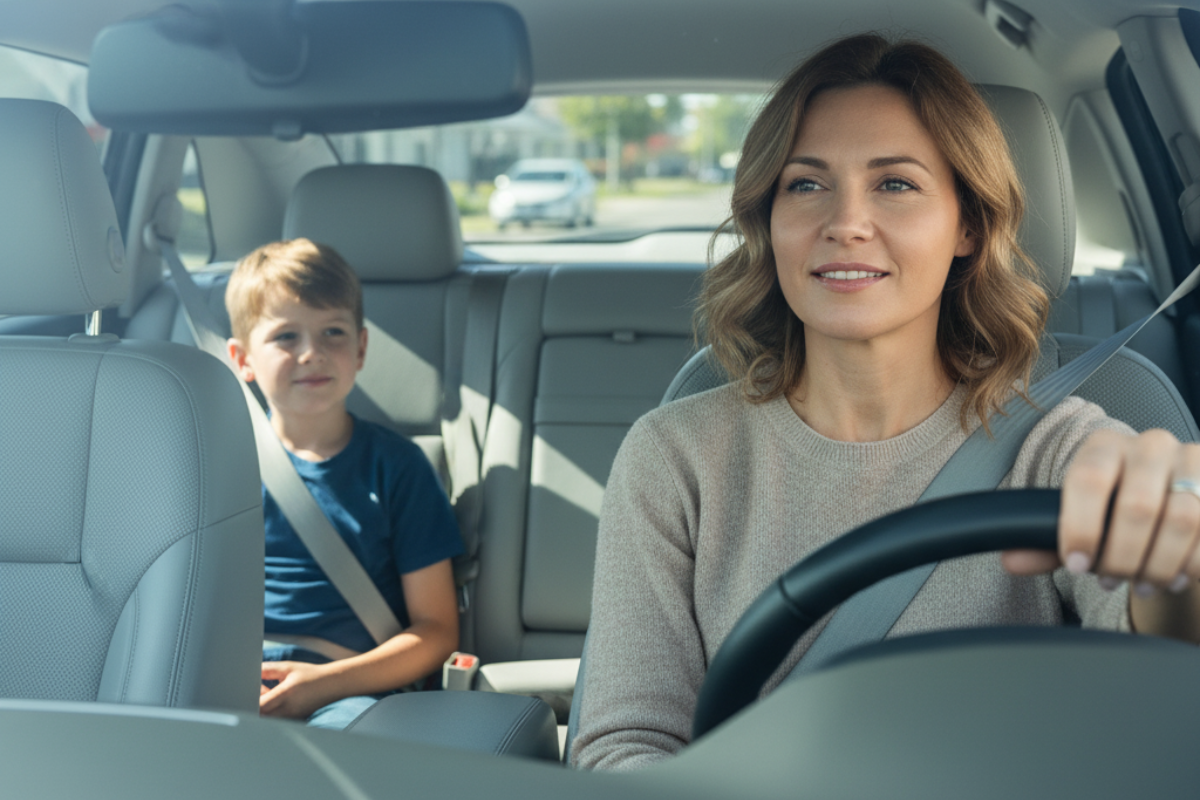
Two weeks later, Aiden rides in a different vehicle. It’s quiet—just him and one other student. The driver, trained in autism support, greets him the same way every day: “Hi Aiden. Ready to go home?” She takes the same route, at the same time, with the music off. When Aiden arrives home, he’s calm. Rachel exhales.
This is the difference specialized transportation for autistic children makes. It’s not about luxury or convenience—it’s about creating an environment where autistic kids can regulate, where sensory needs are understood, and where transportation supports education instead of undermining it.
On this International Day of Persons with Disabilities, we recognize that for autistic children, appropriate transportation isn’t just a logistical detail. According to education experts, the school day starts the moment a student steps out of their home and isn’t over until they’re safely transported back, making transportation a critical component of the education continuum. This guide breaks down what makes specialized transportation for autistic children actually work—and what parents should demand when advocating for their child’s needs.
Why Standard School Buses Fail Many Autistic Children
Let’s be clear about what traditional school bus transportation requires: tolerance of noise, crowds, unpredictability, forced social interaction, and rapid transitions. For autistic children—especially those with sensory processing challenges—this combination can be overwhelming to the point of shutting down or melting down.
Research shows that individuals with autism often have difficulty with loud noises, crowded spaces, unfamiliar environments, and sudden changes, all of which can trigger sensory overload and lead to anxiety and meltdowns. Additionally, communication difficulties contribute significantly to transportation challenges faced by individuals with autism.
Here’s what standard buses typically involve:
Sensory overload from multiple sources.
Engine noise, squealing brakes, dozens of kids talking and yelling, fluorescent lighting, the smell of diesel fumes, physical bumping and jostling. For autistic children with sensory sensitivities, this isn’t just unpleasant—it’s physically painful. Their nervous system can’t filter out the input, and they’re in fight-or-flight mode the entire ride.
Unpredictable routines and changes.
Different substitute drivers. Routes that change based on traffic or student pickups. Arrival times that vary by 10-15 minutes. Other students getting on and off at different stops. Consistency is vital for autistic students, and transportation that pairs students with the same driver every day can provide stability, familiarity, security, and trust.
Forced social demands.
Sharing space with peers who may not understand autism. Navigating where to sit, how to respond to teasing or questions, how loud to be. For autistic children who struggle with social communication, the bus becomes an unstructured social situation they can’t escape from.
Multiple transitions in rapid succession.
Home → outside → bus stop → bus → moving bus → school → classroom. Each transition requires mental and emotional regulation. By the time an autistic child reaches the classroom after a chaotic bus ride, they’ve already exhausted their coping capacity.
No accommodation for meltdowns or shutdowns.
If an autistic child melts down on a crowded bus, the driver can’t pull over and give them space. There are 40 other kids on board and a schedule to keep. The child either holds it together (exhausting) or melts down publicly (humiliating and potentially traumatic).
This is why specialized transportation for autistic children exists—not as an upgrade, but as an appropriate accommodation that allows autistic students to actually access their education.
What “Specialized” Actually Means in Transportation
Specialized transportation for autistic children isn’t just a smaller vehicle. It’s transportation designed around autism-specific needs. Here’s what that requires:
Same Driver, Every Single Day
Expert recommendations emphasize that consistency is vital, and best practices include family meet-and-greet sessions where the driver meets with the family so everyone can become acquainted, starting the relationship off on a foundation of appropriate accommodation and communication.
Why this matters:
Autistic children thrive on predictability. When the same driver picks them up every day, they know what to expect. They learn to trust that person. The driver learns the child’s communication style, triggers, and calming strategies. This relationship can’t be built with rotating drivers.
What parents should demand:
Guaranteed driver consistency, not “usually” or “when possible.” Substitutes should be rare, pre-announced, and ideally introduced to your child before the first ride.
For drivers considering this work:
This commitment to consistency is what makes you valuable in specialized transportation for autistic children. Parents will specifically request drivers who show up reliably and build genuine relationships with their kids. Learn more about becoming a driver who makes this kind of impact.
Small Groups or One-on-One Service
Why this matters:
Large groups create sensory chaos. Specialized transportation for autistic children typically involves 1-3 students maximum, creating a calm environment where individual needs can be met.
What parents should look for:
Ask: “How many students will be in the vehicle with my child?” If the answer is 6-8 students, that’s not specialized—that’s just a smaller bus.
Sensory Accommodations Built Into Every Ride
What this includes:
- Music off (or child-specific music if that calms them)
- Windows rolled up to reduce outside noise
- Temperature controlled to child’s comfort
- No strong smells (air fresheners, food, perfume)
- Allowing comfort items (fidget toys, stuffed animals, noise-canceling headphones)
- Dimmer lighting if the vehicle allows
What parents should demand:
The ability to customize the sensory environment to your child’s specific needs. If your child needs complete silence, that should be honored. If they need a specific playlist, the driver should accommodate it.
Communication Through Multiple Methods
Many autistic children are minimally verbal or nonverbal. Specialized transportation for autistic children requires drivers trained in alternative communication:
AAC devices and apps:
Drivers learn to recognize and respond to communication devices (tablets with apps like Proloquo2Go, dedicated devices).
Visual schedules:
Picture cards showing the route sequence (home → car → school) reduce anxiety by making the abstract concrete.
Gesture-based communication:
Thumbs up/down for yes/no, pointing, taking the driver’s hand to indicate needs.
Behavioral observation:
Understanding that covering ears means “too loud,” rocking means “overwhelmed,” unbuckling means “uncomfortable”—not “misbehaving.”
For more on how drivers communicate with nonverbal students, see our guide on safe school transportation for nonverbal kids.
Training Specific to Autism
Not every driver understands autism. Specialized transportation for autistic children requires training in:
- Autism spectrum basics and how it affects transportation
- Sensory processing and how to reduce overload
- De-escalation techniques that don’t rely on verbal reasoning
- Recognizing and responding to meltdowns vs. tantrums
- Following IEP accommodations specific to transportation
- Understanding stimming behaviors and why they shouldn’t be stopped
What parents should ask:
“What autism-specific training do your drivers receive?” Generic “special needs training” isn’t enough—it needs to be autism-focused.
How to Access Specialized Transportation Through Your District
Under IDEA (Individuals with Disabilities Education Act), transportation is a related service that must be provided if necessary for a child to access their education. Transportation can be included as a related service in an IEP if it’s necessary for the child to benefit from special education, which may involve providing specialized transportation or modifying the regular system to accommodate the child’s needs.
Step 1: Document why standard transportation doesn’t work.
Keep records of: meltdowns after bus rides, your child’s distress about the bus, communication from school about your child arriving dysregulated, your own observations of how the bus affects your child.
Step 2: Request an IEP meeting focused on transportation.
Schedule a meeting specifically to address transportation. Present your documentation and explain why the current bus isn’t allowing your child to access their education effectively.
Step 3: Request specialized transportation as a related service.
Be specific: “My child requires transportation with a consistent driver trained in autism support, in a vehicle with no more than 3 students, with sensory accommodations including [list specifics].”
Step 4: Know your rights.
The district may claim budget constraints. Remind them that under IDEA, lack of funds doesn’t excuse failure to provide appropriate services. Parents are often the strongest advocates for their children and can work with transportation providers, school administrators, and community leaders to ensure unique needs are understood and accommodated.
Step 5: Consider bringing an advocate.
If the district pushes back, consider bringing a special education advocate or attorney to the IEP meeting. Sometimes districts respond better to external pressure.
Red Flags vs. Green Flags in Providers
Red Flags (walk away immediately):
❌ “We treat all kids the same”
❌ “Your child just needs to adjust to the bus”
❌ Can’t guarantee same driver
❌ No autism-specific training
❌ Large groups (6+ students)
❌ Won’t allow sensory accommodations
❌ No trial run offered
Green Flags (good signs):
✅ Drivers have documented autism training
✅ Same driver guaranteed daily
✅ Small groups (1-3 students max)
✅ Sensory accommodations built into service
✅ Direct parent-driver communication
✅ Trial run offered before committing
✅ Providers equip drivers with documents outlining each child’s specific needs, serving as an extension of their IEP specific to transportation
Why Yuni Rides Specializes in Autism Support
At Yuni Rides, specialized transportation for autistic children isn’t a niche service—it’s central to our mission:
✅ Same driver every day – Consistency guaranteed
✅ Autism-specific training – Sensory processing, communication, de-escalation
✅ Small groups (1-3 students) – Calm, controlled environment
✅ Sensory accommodations standard – Music off, noise control, comfort items welcome
✅ Visual supports provided – Picture schedules, communication cards
✅ Direct parent communication – Text or call driver directly
✅ IEP collaboration – We work with districts to meet transportation requirements
We partner with school districts to provide transportation that meets IEP requirements for autistic students. If your child needs specialized transportation for autistic children, work with your IEP team to explore district-funded options.
Parents: Need specialized transportation for your autistic child?
Yuni Rides works with districts to provide autism-trained drivers and sensory-friendly routes. Contact your IEP team about partnerships.
→ Contact Us: (415) 535-2155
Want autism-friendly transportation details?
See our complete guide to autism-friendly school transportation protocols.
→ Autism-Friendly Transportation
Drivers: Want to work with autistic children?
Learn how to become a driver trained in autism support and sensory accommodations.
→ Become a Driver
Specialized transportation for autistic children isn’t about comfort—it’s about access to education.
For parents: Demand what your child needs. For drivers: Learn what autism support actually requires.