
Safe School Transportation for Nonverbal Kids: What Parents Need
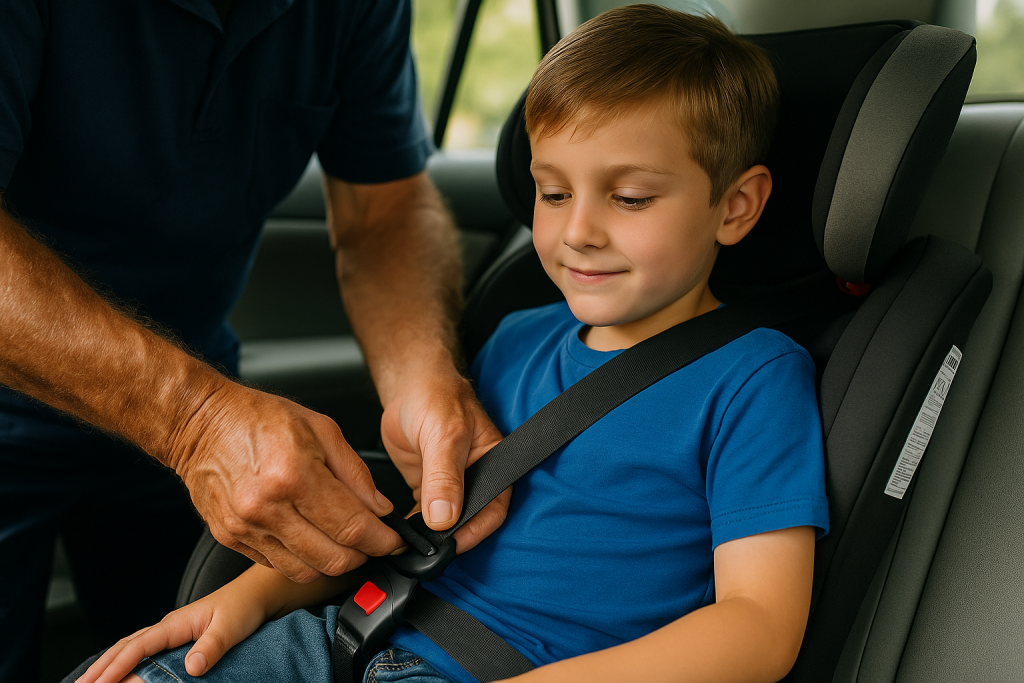
Sarah arrives at 7:15 AM to watch the handoff.
Her son Ethan, eight years old and minimally verbal with autism, gets out of the car. The driver—Maria—kneels at his eye level and holds up a laminated picture card showing a school building. Ethan touches the card. Maria nods and points to herself, then makes a driving gesture. Ethan understands: We’re going to school. I’m driving you. He climbs into his seat. Maria buckles him in, shows him another picture card (a clock showing 7:45), and they drive off.
Sarah exhales. It took three drivers before they found Maria—someone who understood that Ethan can’t say “I’m scared” or “That hurt” or “I don’t feel safe.” Someone who learned to communicate through pictures, gestures, and observation instead of words.
Today—International Day of Persons with Disabilities—reminds us that safety for nonverbal children isn’t just physical. It’s about communication, dignity, and trust. When a child can’t verbally tell you what happened during the ride, safe school transportation for nonverbal kids requires drivers trained to communicate beyond words and protocols that protect children who can’t speak for themselves.
This guide breaks down what makes safe school transportation for nonverbal kids actually safe—the communication methods drivers must understand, the handoff protocols that prevent disasters, and how parents can ensure their child gets the specialized support they need.
Why Nonverbal Kids Need Different Transportation Protocols
Standard school bus systems operate on an assumption: kids can talk. They can answer “Who’s picking you up today?” They can say “I feel sick” or “That kid hit me” or “The driver yelled at me.” They can tell parents how the ride went.
Nonverbal children—whether they’re minimally verbal with autism, have severe speech delays, or use alternative communication methods—can’t rely on spoken language. According to research cited by the New York State Education Department, communication challenges (including nonverbal status and limited understanding of questions and directions) are documented considerations when determining special transportation needs for students with disabilities.
This creates specific vulnerabilities in transportation:
They can’t report problems.
If something goes wrong—if they’re scared, hurt, confused, or upset—they can’t verbally tell anyone. Parents rely entirely on the driver’s observations and the child’s behavioral cues to understand what happened.
They can’t ask for help.
If they need the bathroom, feel sick, or don’t understand what’s happening, they can’t ask. They might show distress through behavior (crying, rocking, trying to unbuckle), but without communication support, the driver may misinterpret these cues.
They’re vulnerable to being misunderstood.
Standard bus drivers often interpret nonverbal children’s behavior as “non-compliance” or “misbehavior” when it’s actually communication. A child unbuckling repeatedly might be saying “I’m uncomfortable” or “This is too tight”—but without training, the driver sees it as defiance.
They can’t verify identity or authorization.
You can’t ask a nonverbal child “Is this person your mom?” or “Do you know this person?” Standard handoff protocols that rely on verbal confirmation don’t work.
Parents can’t get a verbal report.
When you pick up your neurotypical child, you ask “How was the ride?” and they tell you. With a nonverbal child, you’re dependent on the driver proactively communicating—and many don’t unless something obviously goes wrong.
This is why safe school transportation for nonverbal kids isn’t just regular transportation with a few adjustments. It requires fundamentally different communication protocols, driver training, and safety procedures.
How Drivers Communicate with Nonverbal Kids: Beyond Words
The drivers who successfully work with nonverbal children don’t just “figure it out.” They’re trained in multiple communication methods and learn to adapt based on each child’s specific needs. Here’s what safe school transportation for nonverbal kids requires:
AAC Devices and Communication Apps
Many nonverbal children use Augmentative and Alternative Communication (AAC) devices—tablets or dedicated devices with buttons showing pictures, symbols, or words. When a child presses a button, the device speaks for them or shows what they’re trying to communicate.
What drivers need to know:
- How to recognize different AAC devices (iPads with communication apps, dedicated devices like Tobii or Proloquo2Go)
- How to wait for the child to use their device instead of rushing them
- How to respond appropriately when the child communicates through the device
- Basic symbols and words commonly used for transportation (bathroom, help, stop, scared, hurt, home, school)
Example in practice:
Ethan’s AAC device has a “bathroom” button. During the afternoon route, he presses it. Maria pulls over safely, calls the parent to confirm what to do, and waits. She doesn’t panic, doesn’t dismiss it, doesn’t try to “power through” to school. She responds to his communication.
For drivers considering this work:
Training in safe school transportation for nonverbal kids includes hands-on practice with AAC devices. You’ll learn common communication apps and how to support children in using them during routes. This specialized skill is what makes you valuable to families who desperately need drivers who understand. Learn more about what training student transportation drivers receive.
Visual Schedules and Picture Exchange
Many nonverbal children rely on visual supports—pictures or symbols that show what’s happening next. Visual schedules reduce anxiety by making abstract concepts (like “we’re going to school”) concrete and visible.
What drivers use:
- Laminated picture cards showing the route sequence: house → car → road → school building
- Clock pictures showing approximate arrival time
- “First/Then” cards (“First we drive, then you go to class”)
- Photos of the driver, the vehicle, and key locations
Example in practice:
Before starting the car, Maria shows Ethan three picture cards in sequence: car, road, school. He touches each one. This visual routine tells him what’s about to happen and reduces his anxiety about the unknown.
Why this matters:
Visual communication isn’t “extra”—for many nonverbal children, it’s essential. Without visual supports, they’re operating in a world of unpredictable verbal commands they may not fully process. Visual schedules give them control and understanding.
Gesture-Based Communication
Some nonverbal children communicate primarily through gestures, pointing, or leading adults by the hand. Drivers in safe school transportation for nonverbal kids services learn to recognize and respond to these gestures.
Common gestures drivers learn:
- Thumbs up/thumbs down for yes/no questions
- Pointing to indicate wants or needs
- Taking the driver’s hand and leading them (often means “I need to show you something”)
- Head shaking or nodding
- Covering ears (too loud), covering eyes (too bright), or similar sensory-related gestures
What drivers learn to do:
- Ask yes/no questions that can be answered with gestures (“Are you okay? Thumbs up or down?”)
- Follow the child’s lead when they gesture or point
- Never force gestures or assume what a gesture means without confirmation
Example in practice:
Halfway through the route, Ethan covers his ears. Maria immediately recognizes this as a sensory cue. She lowers the radio, rolls up the windows (reducing outside noise), and checks her rearview mirror to see if he’s calmer. He drops his hands from his ears. She’s correctly interpreted his communication.
Body Language and Behavioral Cues
For nonverbal children, behavior is communication. A child who’s unbuckling repeatedly isn’t “misbehaving”—they’re communicating discomfort, fear, sensory overload, or a need that isn’t being met. Drivers trained in safe school transportation for nonverbal kids learn to read these cues.
What drivers observe:
- Signs of distress: Rocking, hand-flapping, covering ears/eyes, trying to escape the seatbelt, crying, withdrawing
- Signs of comfort: Relaxed posture, looking out the window calmly, engaging with a comfort item, making eye contact (if typical for that child)
- Signs of a need: Squirming (might need bathroom), touching their stomach (might feel sick), reaching toward something (might want access to a specific item)
What drivers do:
- Pause and assess before reacting
- Use communication tools (AAC, visuals, gestures) to ask if the child is okay
- Adjust the environment (reduce noise, change temperature, pull over if needed)
- Communicate observations to parents (“Ethan seemed uncomfortable today—kept pulling at his seatbelt. I loosened it slightly and he calmed down. Let me know if I should adjust differently.”)
Why this matters for drivers:
This skill—interpreting behavior as communication—is what separates drivers who can work with nonverbal kids from those who can’t. It requires patience, observation, and training. And it’s why drivers with backgrounds in special education, healthcare, or caregiving often excel in this work—they already understand that behavior communicates needs.
The Handoff Protocol for Nonverbal Children
Standard handoff protocols rely on verbal confirmation: “Is this your mom?” or “Who’s picking you up today?” With nonverbal children, these questions don’t work. Safe school transportation for nonverbal kids requires different verification systems.
Visual Verification Systems
What drivers use:
- Photos of all authorized adults stored in the app or printed on a laminated card
- Visual matching: the driver compares the person at the door to the authorized photo
- No assumptions based on familiarity or appearance
How it works:
Driver arrives for pickup. A woman answers the door. The driver checks the app—this woman’s photo is listed as “Grandmother (authorized).” The driver confirms identity, hands child over. If the woman wasn’t on the authorized list, the driver would call the parent immediately for verification before releasing the child.
Why this matters:
Nonverbal children can’t tell you if someone is authorized to pick them up. They might go willingly with anyone familiar, even if that person isn’t supposed to take them. Visual verification protects them from being released to the wrong person.
Parent-Driver Direct Communication
What parents need:
- Ability to text or call the driver directly (not just dispatch)
- Real-time updates if anything changes (delays, route adjustments, child’s behavior)
- Proactive communication from the driver about how the ride went
What drivers do:
- Text parents before pickup if there’s any change (“Running 5 minutes late due to traffic”)
- After drop-off, send a brief update (“Ethan had a good ride today—calm and relaxed”)
- If something unusual happens, communicate immediately (“Ethan covered his ears a lot today. I reduced noise but wanted you to know in case something’s bothering him”)
Why this matters:
Because nonverbal children can’t tell you how the ride went, parents need direct communication from the driver. This isn’t optional—it’s how parents stay informed about their child’s wellbeing during transport.
Never Leave Child Unattended Rule
The protocol:
If the authorized adult isn’t present at pickup or drop-off, the driver does not leave the child. They call dispatch, who contacts the parent. The driver waits with the child in the vehicle until either the authorized adult arrives or alternate arrangements are made.
Real scenario:
Driver arrives for afternoon drop-off. No one is at the door. Driver tries calling the parent—no answer. Driver calls dispatch. Dispatch tries alternate contacts. Meanwhile, driver stays parked with Ethan in the vehicle, using visual cards and calming strategies to keep him comfortable. After 15 minutes, grandmother (authorized) arrives—she’d been stuck in traffic. Driver verifies identity via photo, hands Ethan off, documents the delay.
What never happens:
Driver never leaves Ethan on the porch, never lets him wait inside the house alone, never releases him to an unapproved neighbor who offers to help. These scenarios—which happen with alarming frequency on standard school buses—are never acceptable in safe school transportation for nonverbal kids.
For drivers:
This protocol is non-negotiable. Even if you’re running late for another pickup, even if the parent “usually” arrives within minutes, even if a neighbor insists they’ll watch the child—you do not leave a nonverbal child unattended. This is what makes safe school transportation for nonverbal kids legally compliant and actually safe.
Training That Makes Drivers Qualified for Nonverbal Kids
Not every driver can work with nonverbal children. The training required for safe school transportation for nonverbal kids goes far beyond basic driving and child safety. Here’s what qualified drivers learn:
Understanding nonverbal communication methods:
Training includes hands-on practice with AAC devices, visual schedules, gesture systems, and behavioral observation. Drivers learn that “nonverbal” doesn’t mean “non-communicative”—it means communication happens through different channels.
De-escalation for nonverbal children:
Standard de-escalation techniques (talking calmly, reasoning, explaining) don’t work with nonverbal kids. Drivers learn to use visuals, reduce sensory input, give space, and wait—not talk more.
IEP basics and accommodations:
Drivers understand what IEPs are, how to read the transportation section, and how to follow individualized plans. If a child’s IEP specifies “must use visual schedule before starting car,” the driver does it—every time.
Medical emergency protocols:
Many nonverbal children have co-occurring medical conditions (seizures, severe allergies, respiratory issues). Drivers learn to recognize medical emergencies, use emergency communication tools (the child might not be able to say “I can’t breathe”), and follow medical action plans.
Parent communication skills:
Drivers learn how to communicate observations clearly and non-judgmentally: “Ethan seemed overwhelmed today” not “Ethan was bad.” They learn to ask parents for guidance: “What usually helps when he covers his ears?” This collaboration between driver and parent is essential.
Why this training matters for drivers:
This specialized training is what makes you employable in safe school transportation for nonverbal kids. Families will specifically request drivers with this training. Districts will contract with providers who can demonstrate driver qualification. And you’ll earn higher compensation because your skills are in demand. For more on driver pay and opportunities, see how much school transportation drivers make.
What Parents Should Demand from Providers
If you’re evaluating safe school transportation for nonverbal kids services, here’s your checklist:
✅ Driver training in nonverbal communication documented and specific
Ask: “What training do drivers receive in AAC devices, visual supports, and nonverbal communication?” Generic answers like “we’re trained with special needs kids” aren’t enough.
✅ Same driver every day guaranteed
Nonverbal children need consistency to build trust and routine. Rotating drivers resets the relationship constantly.
✅ Visual verification system for handoffs
Ask: “How do you verify who’s authorized to pick up my child if they can’t verbally confirm?” Look for photo-based systems, not just verbal protocols.
✅ Direct parent-driver communication
You need to be able to text or call the driver directly—not just corporate dispatch. Ask: “Can I communicate directly with my child’s driver?”
✅ AAC and visual support materials provided
The provider should supply visual schedules, communication cards, or be willing to use the child’s existing AAC device. Ask: “What visual supports do you provide?”
✅ Behavioral observation and reporting
Drivers should proactively share observations: “Your child seemed happy today” or “Your child covered their ears—here’s what I did.” Ask: “How do drivers communicate about my child’s ride?”
✅ Trial run before committing
Your child should meet the driver, see the vehicle, and do a practice ride with you present. This lets you assess whether the driver truly understands nonverbal communication.
How to Access Safe Transportation Through Your District
Under federal law (IDEA), transportation is a related service for students with IEPs when necessary to access education. If your child is nonverbal and requires specialized transportation, here’s how to secure it through your district:
Step 1: Document communication needs in the IEP.
During IEP meetings, explicitly describe your child’s communication methods and why standard bus transportation isn’t appropriate. Example: “Child is nonverbal and uses AAC device. Cannot verbally confirm safety concerns or report problems. Requires driver trained in nonverbal communication.”
Step 2: Request specialized transportation as a related service.
Ask the IEP team to include transportation with specific accommodations: same driver daily, training in AAC/visual supports, direct parent communication, visual verification for handoffs.
Step 3: If the district can’t provide it, request they contract with a qualified provider.
Many districts don’t have buses equipped for nonverbal children’s needs. They’re required to arrange alternatives—often through private providers like Yuni Rides who specialize in safe school transportation for nonverbal kids.
Step 4: Follow up in writing.
After the IEP meeting, send written confirmation of what was agreed upon. If transportation changes are approved, ensure they’re documented with specificity.
Why Yuni Rides Understands Nonverbal Communication
At Yuni Rides, safe school transportation for nonverbal kids isn’t an add-on service—it’s foundational to how we operate:
✅ Drivers trained in AAC devices, visual supports, and gesture-based communication
✅ Same driver every day—consistency guaranteed
✅ Visual verification systems for handoff security
✅ Direct parent-driver communication
✅ Behavioral observation and proactive reporting
✅ Small groups (1-3 students) reducing sensory overload
✅ Visual schedules and communication supports provided
We work with school districts to provide transportation that meets IEP requirements for nonverbal students. If your child needs safe school transportation for nonverbal kids, work with your IEP team to explore district-funded options through providers trained in nonverbal communication.
Parents: Need safe transportation for your nonverbal child?
Yuni Rides partners with districts to provide drivers trained in nonverbal communication and AAC support. Contact your IEP team about district partnerships.
→ Contact Us: (415) 535-2155
Want to see our autism-specific protocols?
Learn how we support autistic students (many of whom are minimally verbal) with sensory accommodations and trained drivers.
→ Autism-Friendly Transportation
Looking for top-rated special needs services?
Explore what makes transportation truly safe for students with complex communication needs.
→ Top-Rated Special Needs Transportation
Drivers: Want to learn nonverbal communication skills?
Become a driver who makes a difference for nonverbal children and their families.
→ Become a Driver
Safe school transportation for nonverbal kids isn’t about talking—it’s about listening in every other way.
For parents: Your child deserves drivers who understand their communication. For drivers: This training changes lives.