
Providing Earning Opportunities for Veterans through Student Transportation Programs
There’s a question veterans hear constantly after leaving service: “What are you going to do now?”
It sounds simple. It’s not.
Because what you’re really being asked is: How do you take skills honed in high-stakes environments and translate them into civilian work? How do you find something that offers structure without rigidity, purpose without the intensity, flexibility without the chaos? How do you contribute to your community in a way that actually matters? Are there enough opportunities for Veterans out there?
For many veterans, the answer isn’t obvious. The transition from military service to civilian employment is one of the most challenging phases of post-service life. Jobs that sound good on paper often fail to deliver the meaning, respect, or structure veterans need. Work that pays well can feel hollow. Flexible gigs can feel aimless.
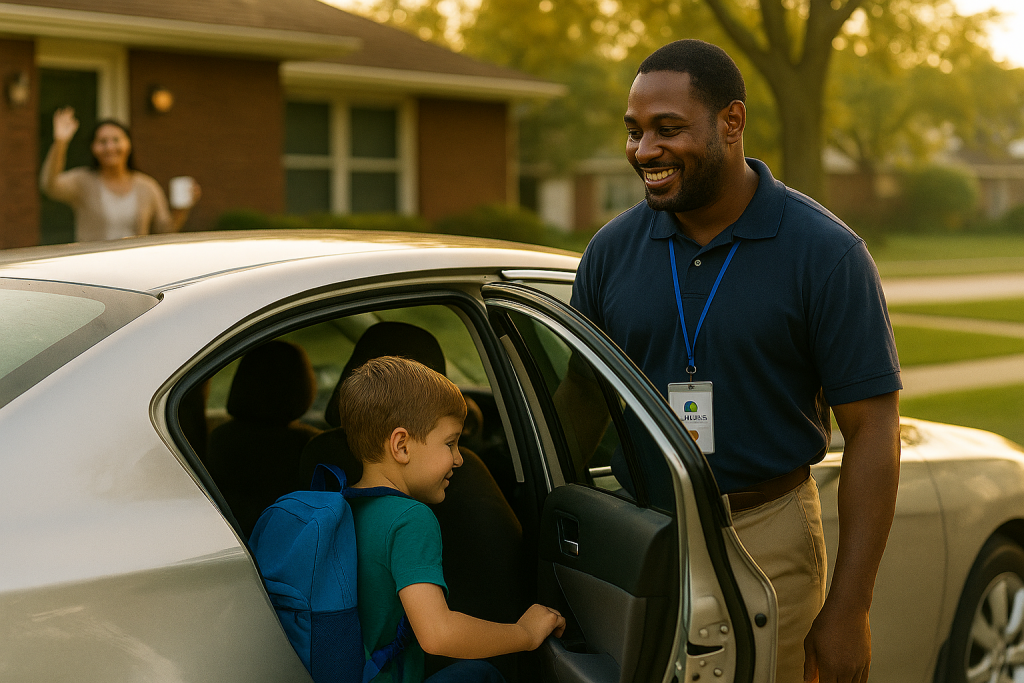
Providing opportunities for veterans isn’t about charity or optics. It’s about recognizing that certain types of work naturally align with the skills, values, and needs of people who’ve served. Student transportation—specifically, driving kids to and from school—is one of those opportunities. And here’s why it works when so many other options don’t.
The Transition Challenge: What Veterans Face After Service
Let’s start with the reality. According to the U.S. Department of Veterans Affairs, approximately 200,000 service members transition out of the military every year. They return to communities across the country, and they’re supposed to just… figure it out.
Some do. Many struggle.
Here’s what veterans consistently report as the hardest parts of civilian transition:
Loss of mission.
In the military, your work has clear purpose. You’re part of something bigger. You’re contributing to national security, unit cohesion, mission success. In civilian life, a lot of work feels transactional. You’re making someone else rich. You’re moving widgets. You’re optimizing metrics that don’t matter. The sense of why disappears.
Loss of structure.
Military life is regimented. You know your schedule. You know your responsibilities. You know the standards. Civilian life, especially gig economy work, is chaotic. Schedules change constantly. Expectations are vague. There’s no clear chain of command. For veterans used to operating within structured systems, that lack of clarity is disorienting.
Loss of camaraderie.
In the military, you’re part of a unit. You know your people. You trust them. You look out for each other. Civilian workplaces—especially large corporations or gig platforms—are isolating. You’re a number. You’re competing with coworkers instead of collaborating. The sense of team is gone.
Difficulty translating skills.
Veterans know they have valuable skills. Leadership. Responsibility. Calm under pressure. Attention to detail. But how do you put that on a resume? How do you explain to a hiring manager that coordinating a convoy translates to logistics? That de-escalating tense situations translates to conflict resolution? Many veterans undersell themselves because they don’t know how to translate military experience into civilian language.
Financial pressure to take any job.
Bills don’t wait for you to find the “right” job. Many veterans take the first thing available—warehouse work, retail, delivery gigs—because they need income immediately. Those jobs might pay the bills, but they don’t provide purpose, respect, or long-term satisfaction.
Providing opportunities for veterans means understanding these challenges and creating roles that address them directly. Student transportation does that in ways that aren’t immediately obvious until you break it down.
Why Student Transportation Aligns with Veteran Skills
Let’s talk about the actual overlap between military service and driving kids to school. It’s more substantial than you’d think.
Responsibility for others’ safety.
In the military, you’re often responsible for the safety and wellbeing of others—your squad, your unit, civilians in a conflict zone. That responsibility is serious. Lives depend on you following protocols, staying alert, making good decisions under pressure.
Driving kids to school operates on the same principle. You’re responsible for the safety of children who can’t protect themselves. Parents are trusting you with their most important people. That responsibility is real, and it requires the same mindset: vigilance, protocol adherence, and accountability.
Following strict protocols without deviation.
Military operations rely on SOPs—standard operating procedures. You don’t improvise when lives are at stake. You follow the protocol, even when it feels tedious or unnecessary, because protocols exist for a reason.
Student transportation has zero-tolerance safety rules for the same reason. Child locks engaged. Curbside pickups only. Authorized guardians only. No phone use while driving. Veterans don’t question why these rules exist—they just follow them. That mindset is exactly what this work requires.
Staying calm under pressure.
Veterans have been trained to manage stress without losing composure. Whether it’s a child having a meltdown, a parent who’s upset about a schedule change, or an unexpected road closure, the ability to stay calm and problem-solve is essential. Veterans do this instinctively because they’ve been trained to do it in far more intense situations.
Clear communication in high-stakes moments.
Military communication is precise, especially in stressful situations. You don’t ramble. You don’t panic. You relay information clearly and quickly. That translates directly to student transportation: notifying parents about delays, coordinating with dispatch during emergencies, reassuring a child who’s scared.
Attention to detail and situational awareness.
Veterans are trained to notice what’s off. A child who’s usually talkative is silent. A parent who’s normally punctual is late. A street that’s usually clear has construction. That awareness—constantly scanning, constantly assessing—is second nature to veterans. It’s also critical to safe transportation.
Consistency and reliability.
Military service teaches you that showing up matters. You don’t call in sick because you don’t feel like working. You don’t skip a patrol because it’s cold outside. You show up. Every time. That reliability is exactly what families need from a driver. Veterans understand that consistency isn’t optional—it’s the foundation of trust.
Providing opportunities for veterans in student transportation isn’t about finding make-work for people who served. It’s about recognizing that the skills veterans bring are exactly the skills this work requires.
What Veterans Need (And What Student Transportation Provides)
Let’s flip the equation. Instead of asking what veterans bring to the job, let’s ask what the job brings to veterans.
Flexibility without chaos.
Veterans often need part-time work that fits around VA appointments, physical therapy, family commitments, or other obligations. Student transportation offers predictable part-time blocks: morning routes (6:30–9:00 AM) and afternoon routes (2:00–4:30 PM). You can choose one or both. You know your schedule weeks in advance. It’s flexible, but it’s not chaotic.
Structure without rigidity.
You have a set route. Set pickup times. Set protocols. There’s a clear routine. But you’re not micromanaged. You’re not being surveilled by an algorithm. You’re trusted to do the job. For veterans who miss structure but don’t want the intensity of military life, this balance works.
Purpose without the weight.
Driving kids to school isn’t combat. It’s not life-or-death. But it is meaningful. You’re solving a real problem for real families. You’re giving parents peace of mind. You’re giving kids a safe, consistent start to their day. That sense of purpose—of contributing something that matters—fills a gap many veterans feel after service.
Community connection.
Veterans are often looking for ways to reintegrate into their local communities. Student transportation embeds you directly into the fabric of your neighborhood. You’re serving families who live near you. You’re supporting local schools. You’re part of something local and tangible. That connection matters.
Respect and trust.
Veterans are used to being respected for their service. In many civilian jobs, that respect disappears—you’re just another employee. In student transportation, especially when families know you’re a veteran, that respect remains. Parents trust you more. Kids look up to you. Schools value your reliability. You’re not anonymous.
Income that respects your time.
Many veterans are managing disability benefits, retirement pay, or VA support. They need supplemental income, but they don’t need—or want—a demanding full-time job. Student transportation provides steady, predictable income without consuming your entire day. Weekly pay means you’re not waiting around for a paycheck.
The U.S. Bureau of Labor Statistics projects steady demand for passenger vehicle drivers, including school transportation, as families increasingly rely on specialized services. For veterans, this represents stable work in a field that values reliability and professionalism—two qualities veterans inherently bring.
Real Scenarios: Where Veteran Experience Shows Up
Let’s get specific. Here are actual situations where being a veteran makes you better at this job:
Scenario 1: A parent isn’t home for drop-off.
A civilian driver might panic, might leave the kid on the porch, might make a bad call. A veteran follows protocol: call dispatch immediately, stay with the child in the vehicle, wait for instructions, document everything. No improvisation. No guessing. Just protocol.
Scenario 2: A child with PTSD triggers.
Some kids you’ll drive have experienced trauma. Loud noises startle them. Sudden movements scare them. A veteran who understands trauma responses will recognize the signs, adjust their behavior (speak softly, move slowly, give warnings before turning), and create an environment where the child feels safe. You’re not a therapist, but you understand what triggers look like and how to avoid them.
Scenario 3: Traffic accident blocks your route.
A civilian driver might waste time trying to push through or sitting in traffic. A veteran assesses the situation immediately, checks alternate routes, communicates with dispatch and parents, reroutes efficiently. You’ve been trained to adapt to changing conditions without losing composure. That skill is directly applicable.
Scenario 4: A child refuses to buckle their seatbelt.
A civilian driver might argue, might try to force compliance, might escalate the situation. A veteran uses de-escalation techniques: lower your voice instead of raising it, give the child a choice (“Do you want to buckle it yourself or would you like help?”), stay calm, don’t make it a power struggle. Within five minutes, the situation is resolved.
Scenario 5: A parent is hostile or accusatory.
Some parents are stressed, tired, or dealing with their own issues. They might be rude or confrontational. A veteran stays professional, doesn’t take it personally, responds calmly, documents the interaction if necessary, and moves on. You’ve dealt with worse. You know how to stay composed.
These aren’t hypothetical. These are situations drivers face regularly. Veterans handle them better because you’ve been trained to handle high-pressure, unpredictable situations without losing control.
Addressing the Misconceptions About Veterans in Civilian Work
Let’s talk about the assumptions people make about veterans and why they’re wrong in the context of oppotunities for veterans such as student transportation work.
Misconception: Veterans can’t adjust to civilian work.
Reality: Veterans adjust fine when the work aligns with their skills and values. The problem isn’t veterans—it’s jobs that offer chaos instead of structure, isolation instead of team, and meaninglessness instead of purpose. Student transportation offers structure, community, and meaning. Veterans thrive here.
Misconception: Veterans are too rigid for work that requires flexibility.
Reality: Veterans are trained to adapt. Military operations constantly change. Plans fall apart. You adjust. Veterans aren’t rigid—they’re disciplined. There’s a difference. Discipline means you follow protocols when they matter. Flexibility means you adapt when circumstances change. Veterans do both.
Misconception: Veterans have anger issues or PTSD that make them unsuitable for work with kids.
Reality: Most veterans don’t have PTSD, the national average is almost the same. And among those who do suffer from it, most manage it effectively and are fully capable of professional work. The stereotype that veterans are “broken” or “dangerous” is offensive and inaccurate, this is another reason the opportunities for Veterans are not as commonly available. Veterans are statistically no more likely to have behavioral issues than civilians. In fact, veterans’ training in stress management often makes them better at staying calm around kids than people without that training.
Misconception: Veterans need special accommodations or hand-holding.
Reality: Veterans don’t need hand-holding. They need clear expectations, proper training, and respect. Give them that, and they’ll outperform most civilian hires. Providing opportunities for veterans doesn’t mean lowering standards—it means recognizing that veterans already meet high standards.
How Yuni Rides Supports Veterans Specifically
Here’s what providing opportunities for veterans looks like in practice at Yuni Rides:
Flexibility for VA appointments and medical needs.
We understand that veterans often have ongoing VA appointments, physical therapy, or medical check-ins. Routes are scheduled in blocks, so you can build your work schedule around those commitments. Need to take a morning off for a VA appointment? You work afternoon routes that day. Need a full day? We work with you to arrange coverage.
Training that respects your intelligence.
We don’t patronize you with dumbed-down training. We assume you can handle complexity. Training covers car seat securement, de-escalation techniques, IEP protocols, and safety rules. It’s thorough, not condescending. You’re treated like a professional.
Direct communication with dispatch.
You’re not dealing with an algorithm or a chatbot. When you call dispatch, you talk to a real person who knows your name. If there’s a problem, you get real-time support. If you need to adjust your schedule, you have a conversation with an actual human. That direct line of communication matters.
Referral bonuses for bringing in other veterans.
If you know other veterans looking for work, you can refer them. If they get hired, you both benefit financially. We’re actively building a community of veteran drivers, and we reward you for helping us do that.
Zero-tolerance safety protocols you’ll recognize.
The safety rules at Yuni Rides aren’t suggestions, they’re requirements. Strong policies such as no texting while driving, engaged child lock, hand over to authorized guardians only and curbside pickups only could prove to be daunting for some. But if you’ve served, you already understand why zero-tolerance policies exist. You won’t question them and you’ll just follow them. That mindset is exactly what we need, that is why these opportunities for veterans are ideal.
Respect for your service without making it performative.
We’re not going to thank you for your service every day and then treat you like a disposable gig worker. We’re going to respect your service by offering you work that’s meaningful, structured, and fairly compensated. Actions over words.
The Broader Impact: What Happens When Veterans Drive
There aren’t many flexible opportunities for veterans so when the veterans become student transportation drivers, the impact extends beyond the individual and on the community as a whole, here’s why:
Families feel safer.
Parents know veterans take responsibility seriously. When a parent learns their driver is a veteran, there’s often an immediate sense of relief. They trust that their child is in capable hands.
Kids learn respect for service.
Children who are driven by veterans often hear stories (age-appropriate ones) about service, responsibility, and community. They learn to respect people who’ve served. That early exposure to veterans in positive, everyday roles breaks down stereotypes and builds understanding.
Schools gain reliable partners.
School districts struggle with transportation logistics. Having reliable drivers who show up on time, follow protocols, and communicate effectively makes their jobs easier. Veterans deliver that reliability consistently.
Communities stay connected.
When veterans are embedded in their communities as drivers, coaches, volunteers, or neighbors, communities are stronger. Veterans aren’t isolated. Families aren’t disconnected. The social fabric holds together.
Veterans find purpose again.
The most important impact is on the veterans themselves. Many veterans report that student transportation gives them something they were missing: a reason to get up in the morning that matters. It’s not combat. It’s not deployment. But it is meaningful. And for many veterans, that’s exactly what they need.
Providing opportunities for veterans in student transportation isn’t a favor. It’s a smart match between what veterans need and what communities need. Everyone benefits.
What Veterans Should Know Before Applying
If you’re a veteran considering student transportation work, here’s what you need to know upfront:
It’s not high-intensity work.
If you’re looking for adrenaline or constant challenges, this isn’t it. The work is routine, predictable, and low-key. That’s the point. If you need something calmer than military service but more meaningful than most civilian jobs, this fits.
It requires patience.
Kids have bad mornings. Parents can be demanding. Traffic happens. If you get frustrated easily, this job will test you. But if you’ve learned patience through service, you’ll be fine.
You’ll need to pass a background check.
Standard for anyone working with kids. If you’ve got a clean record, no problem. If you’ve got serious criminal history, that’s a disqualifier.
You’ll need reliable transportation.
Most routes use your own vehicle. It doesn’t need to be new, but it needs to be safe and reliable. If your car is constantly breaking down, this won’t work.
You’ll need to be available during school hours.
Morning routes (6:30–9:00 AM) and afternoon routes (12:00–3:00 PM). If you can’t do either of those blocks, this job won’t fit your schedule.
It’s part-time work, not full-time.
If you need 40+ hours a week, this probably isn’t enough. But if you’re looking for 10–30 hours a week with flexibility, it’s a good fit.
Frequently Asked Questions About Providing Opportunities for Veterans
Do I get preferential hiring because I'm a veteran?
We actively recruit veterans, but you still need to pass the background check, complete training, and demonstrate that you're reliable and professional.
Will I be working with other veterans?
Some of our drivers are veterans. Some aren't. We're building a community of drivers from diverse backgrounds. You will not be joining a veteran-exclusive program rather joining a community where veterans are highly valued.
Can I use VA benefits while working part-time?
That's between you and the VA. Most veterans on disability or retirement can work part-time without affecting their benefits, but you should verify that with your VA representative.
What if I have PTSD or other service-related challenges?
If you're managing PTSD or other challenges and you're cleared to work, that's your business. Yuni Rides doesn't require you to disclose medical information beyond what's legally necessary for the job. If you need accommodations (like avoiding certain triggers), we'll work with you where possible.
s there room for growth or leadership roles?
Yes. As Yuni Rides expands, we need route coordinators, trainers, and dispatch support. Veterans who excel as drivers and want more responsibility can move into those roles.
This Veterans Day and Beyond: An Ongoing Commitment
Providing opportunities for veterans isn’t a Veterans Day marketing campaign. It’s an ongoing commitment to recognizing that certain types of work and certain types of people are a natural fit.
Veterans bring skills that matter: responsibility, calm under pressure, protocol adherence, situational awareness, reliability. Student transportation needs exactly those skills. Families need drivers they can trust. Veterans need work that has structure and meaning. It’s a match that benefits everyone involved.
If you’re a veteran reading this and thinking, “This might actually work for me,” here’s what to do next:
Ready to apply? Start here.
Fill out the application. We’ll walk you through the background check, training, and route assignment process Apply Here
Have questions? Let’s talk.
Call us at (415) 535-2155. We’ll answer anything we didn’t cover here.
→ Contact Us
Want to learn more about driver training?
See what training covers and how we prepare drivers for their first routes.
→ Explore Driver Training
Curious about the perks?
Weekly pay, referral bonuses, flexible schedules—see what comes with driving for Yuni Rides.
→ Learn more
One route at a time. One veteran at a time. One community at a time.
This is what providing opportunities for veterans looks like—not charity, not optics, just smart matches between skills and needs.
Thank you for your service. Now let’s talk about what comes next.