
Autism Friendly School Transport: A Parent’s Safety Checklist
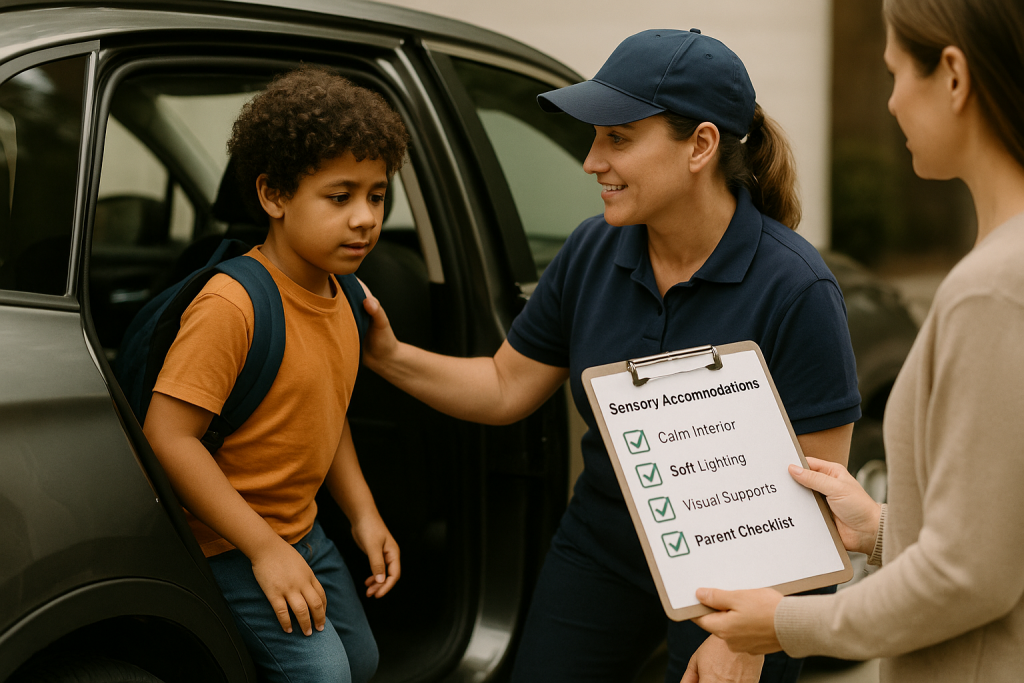
The driver who picks up seven-year-old Marcus every morning isn’t just driving a route.
She knows to count to three before starting the car. She keeps the music off. She doesn’t ask questions on tough mornings—she just gives him space. When Marcus covers his ears because a motorcycle passes too close, she rolls up the windows without being asked. When he needs to bring his fidget toy, she reminds his mom if it’s forgotten at home.
Marcus’s mom calls her a “lifesaver.” Marcus calls her Miss Sarah. And when they run into each other at Target on Saturday afternoon, Marcus lights up and introduces Miss Sarah to his dad. “This is my driver,” he says proudly.
This is what autism friendly school transport actually looks like. It’s not a service—it’s a relationship built on consistency, understanding, and training. And it’s why the role of the driver matters more than most people realize.
According to the Centers for Disease Control and Prevention, about 1 in 31 (3.2%) children aged 8 years has been identified with autism spectrum disorder. For many of these children, traditional school bus transportation creates more problems than it solves. Sensory overload, unpredictable routines, and forced social interaction can turn a 20-minute commute into a two-hour recovery period once they arrive at school.
This checklist is for parents evaluating autism-friendly school transport providers—and for anyone considering becoming a driver who supports autistic children. Because at the end of the day, what makes transportation “autism-friendly” isn’t the vehicle or the route—it’s the person behind the wheel.
Why Traditional School Buses Fail Autistic Children
Let’s be honest about why standard school buses don’t work for many autistic kids. It’s not because these children are “difficult.” It’s because buses are designed for neurotypical children who can tolerate sensory chaos, social demands, and unpredictability without shutting down or melting down.
Research on autism and transpor challenges consistently identifies several barriers: loud noises, crowded spaces, unfamiliar environments, and sudden changes can trigger sensory overload and lead to anxiety and meltdowns. Communication difficulties also contribute to the challenges faced by individuals with autism in transportation settings.
For autistic children, the school bus experience typically includes:
Sensory overload from the moment they board.
The bus engine hums. Kids are yelling. Brakes squeal. The lighting is harsh. Someone’s eating something with a strong smell. For a child with sensory processing challenges, this isn’t just unpleasant—it’s physically painful. Their nervous system goes into fight-or-flight before the bus even moves.
Unpredictability at every turn.
According to research on transportation accessibility, individuals with autism thrive on routine and predictability, making any changes in their usual transportation plan stressful. School buses are the opposite. Substitute drivers show up. Routes change due to traffic. Pickup times vary by minutes. Other kids get on and off at different stops. For an autistic child who needs routine to feel safe, this variability is destabilizing.
Forced social interaction with peers.
Many autistic kids struggle with unstructured social situations. The bus forces close proximity with peers who may not understand autism. They’re expected to navigate where to sit, how loud to be, how to handle teasing. For some kids, this social demand is exhausting before the school day begins.
Multiple hard transitions in rapid succession.
Autistic children often struggle with transitions. The bus requires several: home → outside → bus stop → bus → moving bus → school → classroom. Each transition is a potential breaking point. By the time they reach class, they’ve burned through their regulation capacity.
No accommodation for meltdowns.
If your child melts down on the bus, the driver can’t pull over and give them space. There are other kids on board. There’s a schedule to keep. Your child either holds it together (exhausting) or melts down in front of peers (humiliating, can lead to bullying).
This isn’t a critique of school bus drivers—many are doing their best with limited training and impossible circumstances. But the system itself wasn’t built for autistic children’s needs. That’s where autism friendly school transport becomes essential—and where trained drivers make all the difference.
The Autism Friendly School Transport Checklist
When evaluating private autism friendly school transport providers, use this checklist. These aren’t “nice-to-haves”—they’re requirements. And if you’re considering becoming a driver for student transportation, these are the standards you’ll be trained to meet.
✅ Same Driver, Every Single Day
Why this matters:
Autistic children thrive on consistency. Having the same driver every day means your child can build trust, predict what will happen, and feel safe. A rotating cast of drivers destroys that routine and resets the trust-building process.
What to ask providers:
- “Will my child have the same driver every day?”
- “What happens if the regular driver is sick? Do you have a consistent substitute who knows my child?”
- “How long do drivers typically stay with the company?”
For drivers considering this work:
This is why many parents specifically request drivers who commit long-term. You’re not just transporting a child—you’re becoming a trusted part of their daily routine. That consistency is what makes veteran drivers particularly valued in this role: they understand commitment and showing up when it matters.
Red flag for parents:
If the answer is “usually” or “most of the time,” that’s not good enough. Autism friendly school transport requires guaranteed driver consistency.
✅ Sensory-Controlled Environment
Why this matters:
According to autism transportation research, bright lights, loud noises, crowded spaces, and unfamiliar environments can trigger sensory overload and lead to anxiety and meltdowns. An autism friendly school transport service adapts the environment to the child’s needs.
What to ask providers:
- “Can we adjust the car environment? (music off, windows up/down, temperature)”
- “Will the driver avoid strong smells?”
- “Can my child bring noise-canceling headphones or comfort items?”
- “Is the vehicle interior calm and uncluttered?”
For drivers:
You’ll learn during training how to create a sensory-friendly space. This might mean driving with the radio off, avoiding air fresheners, keeping the interior organized, and understanding when a child needs windows rolled up to reduce outside noise. These adjustments seem small, but they’re the difference between a calm ride and a meltdown.
Red flag for parents:
If the driver insists on playing music or dismisses sensory accommodations, they don’t understand autism.
✅ Predictable Routine and Visual Supports
Why this matters:
Autistic children need to know what’s coming next. Visual schedules, social stories, and consistent routines reduce anxiety and prevent meltdowns. Research consistently shows that gradual exposure to transport environments through pre-travel social stories or virtual tours can help individuals with autism acclimate to sensory stimuli and reduce anxiety.
What to ask providers:
- “Can we create a visual schedule for the route?”
- “Will the driver follow the same routine every day?”
- “Can the driver use clear, direct language?”
- “If there’s a detour or delay, will you notify us in advance?”
For drivers:
You’ll work with parents to establish routines that work for each child. Maybe it’s counting to three before starting the car. Maybe it’s a specific greeting each morning. Maybe it’s taking the exact same route every day. You’ll learn to communicate clearly and directly, avoiding idioms or sarcasm that autistic children often struggle to interpret.
Red flag for parents:
If the provider doesn’t understand visual schedules or dismisses routine as “unnecessary,” they’re not equipped for autism friendly school transport
✅ Curbside Handoff Protocol (Never Leave Child Unattended)
Why this matters:
Safety for autistic children requires clear, consistent handoff procedures. According to a study on parents’ concerns about school transportation, news media increasingly report incidents where children with autism are dropped off at the wrong stop, left behind on empty buses, or face other safety risks while on school transport. Your child should never be left alone or released to someone unauthorized.
What to ask providers:
- “Do you require an authorized adult at pickup and drop-off?”
- “What happens if I’m running late?”
- “How do you verify authorization?”
- “What’s the protocol if no one is home?”
For drivers:
This is non-negotiable training. You never leave a child unattended. You verify the authorized guardian through the app. If no one’s home, you call dispatch and wait with the child. These protocols exist because children’s safety depends on them—and this is where drivers with military or emergency services backgrounds often excel, because they’re trained to follow safety protocols without shortcuts.
Red flag for parents:
Any answer involving leaving your child on the porch or dropping them without confirmation is a dealbreaker.
✅ Training in Autism and De-Escalation
Why this matters:
Not every driver understands autism. Autism friendly school transport requires drivers trained in sensory needs, communication styles, and how to handle meltdowns without escalating.
What to ask providers:
- “What autism-specific training do drivers receive?”
- “How do drivers handle meltdowns or refusal to get in the car?”
- “Do drivers understand de-escalation techniques?”
- “Can the driver follow individualized strategies for my child?”
For drivers:
Your training will cover autism spectrum basics, sensory processing, communication strategies, and de-escalation. You’ll learn that when a child covers their ears, you reduce noise immediately. When a child refuses to buckle in, you give choices rather than demands. When a child melts down, you stay calm, pull over safely if needed, and give them space. This training is what separates autism friendly school transport from regular driving—and it’s why many parents trust trained, experienced drivers over untrained alternatives.
Red flag for parents:
If the answer is “our drivers are just good with kids,” they’re not trained. Autism requires specific knowledge, not just general kindness.
✅ Flexibility for Meltdowns and Tough Mornings
Why this matters:
Meltdowns happen. An autism friendly school transport provider understands this and has protocols for handling them safely and compassionately.
What to ask providers:
- “What happens if my child has a meltdown during the ride?”
- “Will the driver pull over and give them space?”
- “Can the driver use calming strategies I provide?”
- “Is the driver trained to stay calm and not escalate?”
For drivers:
You’ll learn that meltdowns aren’t behavioral issues—they’re nervous system overload. Your job is to stay calm, ensure safety (pull over if needed), give the child space, and use whatever calming strategies the parent has shared (counting, deep breathing, offering a fidget toy). You don’t punish, scold, or demand compliance. You wait. This patience is critical, and it’s why parents value drivers who genuinely understand autism.
Red flag for parents:
If the driver talks about “discipline” for meltdowns or expects your child to “calm down” on command, they don’t understand autism.
✅ Direct Parent Communication
Why this matters:
You need to know how the route went. Was your child calm? Did something trigger them? Autism friendly school transport includes real-time communication with parents.
What to ask providers:
- “Will the driver communicate with me directly?”
- “Will I get updates if something unusual happens?”
- “Can I reach the driver if my child has a tough morning?”
- “Is there a system for daily check-ins?”
For drivers:
You’ll text or call parents directly when needed. If a child had a tough morning, you let the parent know so they can follow up. If something went really well, you share that too. This direct communication builds trust and helps parents feel connected to their child’s experience—even when they’re not physically there.
Red flag for parents:
If you can only communicate through corporate dispatch with no driver access, that’s not autism friendly school transport.
✅ Low-Stimulation Environment (1-2 Kids Maximum)
Why this matters:
Large groups create noise, social demands, and unpredictability. Autism friendly school transport means small groups (ideally 1-2 kids) in a calm vehicle.
What to ask providers:
- “How many kids will be in the car?”
- “Will the other kids have similar needs?”
- “Can my child have a preferred seating position?”
- “What type of vehicle do you use?”
For drivers:
Most autism friendly school transport routes involve 1-2 students. This keeps the environment manageable, reduces sensory overload, and allows you to give each child the attention they need. You’ll learn to coordinate routes so kids with compatible needs ride together, and you’ll understand why keeping groups small matters.
Red flag for parents:
If they’re cramming 6-8 kids into a van, that’s not autism friendly school transport—that’s just a smaller bus.
✅ Trial Run Before Committing
Why this matters:
Your child needs to meet the driver, see the car, and take a practice ride before the first real school day. This reduces anxiety and lets you evaluate fit.
What to ask providers:
- “Can we do a practice run before school starts?”
- “Can my child meet the driver in advance?”
- “Can we drive the route once?”
For drivers:
You’ll often do trial runs with new students. This lets the child get comfortable with you, see the car, understand the routine. It also lets you learn the child’s needs before the pressure of an actual school day. This preparation makes the first real route much smoother.
Red flag for parents:
If they refuse a trial run or say “kids adjust,” they don’t understand preparation for autistic children.
What Makes a Great Autism-Friendly Driver
If you’re a parent reading this, these qualities are what you’re looking for. If you’re considering becoming a driver, these are the traits that make you successful in autism friendly school transport:
Patience – real, unshakable patience.
Not cheerfulness. Not energy. Patience. The ability to stay calm when a child refuses to buckle, when a routine is disrupted, when a meltdown happens. This work requires people who can be steady when things aren’t going smoothly.
Observational skills.
You notice when a child is about to become overwhelmed before they melt down. You catch the signs: covering ears, rocking, getting quiet. You adjust before the crisis happens.
Willingness to follow routines exactly.
Maybe the child needs you to count to three before starting the car every single time. Maybe they need you to park in the exact same spot. You don’t question it—you just do it. Because you understand that routine equals safety for autistic children.
Clear, direct communication.
You don’t use idioms. You don’t say “We’ll leave soon”—you say “We’re leaving in two minutes.” You give clear information and mean exactly what you say.
Genuine respect for the child.
You don’t talk about the child as if they’re not there. You don’t call them “difficult.” You see them as a person with specific needs, and you meet those needs without judgment.
These are the qualities that make drivers successful in autism friendly school transport. And these are the qualities parents look for when they’re choosing who to trust with their child.
Why Drivers Choose This Work (And Why It Matters)
Parents want to know: who are the drivers providing autism friendly school transport? Why do they do this work?
The drivers who excel in autism friendly school transport often have something in common: they’re looking for work that matters. Many are parents themselves who understand what it’s like to worry about your child’s safety. Some are veterans who miss having a mission and find purpose in being the reliable presence a family counts on. Some are retirees who want flexible work that contributes to their community.
And here’s what they say about the work:
“I have a reason to get up that matters.”
After months of unemployment or retirement, the structure of morning routes gives people a reason to set an alarm and show up. That sense of routine and purpose matters.
“I see the difference I make.”
Parents thank them. Kids wave. They’re not processing transactions or filing reports—they’re directly impacting families’ lives every single day.
“It fits my life.”
Morning routes (6:30–9:00 AM) and afternoon routes (2:00–4:30 PM) fit around VA appointments, family commitments, or other work. The flexibility matters for people managing complex lives.
“I’m part of something.”
Isolation is hard. This work connects drivers to families, schools, and communities. They’re not alone in a car competing with other drivers—they’re part of a team supporting children.
If you’re a parent, this is who’s driving your child: people who chose this work because it means something. And if you’re someone considering driving for student transportation, this is what the work offers: income, flexibility, and genuine impact.
How to Prepare Your Child for Autism Friendly School Transport
Even with the best provider and driver, your child needs preparation:
Create a social story.
Write a simple narrative with pictures: “Every morning, [Driver’s name] comes to our house in a [color] car. I get in the back seat. [Driver] drives me to school.” Read it together several times before the first ride.
Do a practice run.
Arrange a test drive before school starts. Let your child see the car, meet the driver, take a brief ride. This reduces anxiety on the first real day.
Identify sensory accommodations.
Does your child need noise-canceling headphones? A favorite stuffed animal? A specific seating position? Communicate these to the driver in advance.
Set up a visual schedule.
Use pictures to show the sequence: home → car → school. Laminate it so your child can carry it. This gives them control and predictability.
Share triggers and calming strategies with the driver.
Tell the driver what upsets your child (loud noises, sudden movements) and what calms them (counting, deep breathing, fidget toys). The more the driver knows, the better they can support your child.
Give it time.
The first few rides might not be perfect. Most kids adjust within 1-2 weeks once the routine becomes predictable.
Frequently Asked Questions About Autism Friendly School Transport
How much does autism friendly school transport cost?
Private autism friendly school transport typically costs $15-$40 per one-way ride, but the school district IEPs cover costs if the bus isn't an appropriate option.
Will my child's IEP cover private transportation?
If the IEP team determines specialized transportation is a related service, the district may fund it. You'll need to advocate during IEP meetings.
What if my child is nonverbal?
Trained drivers communicate through visual schedules, gestures, and observation. Nonverbal doesn't mean unable to communicate—the driver adapts their approach.
Can siblings ride together?
Often yes. Many autism friendly school transport services accommodate siblings, which can reduce the stress for the child and ease the routine.
How do I transition my child from the bus to private transport?
Although, this is a topic for a professional practitioner who specializes in autistic child behavior, however from our findings, it has been observed; use of social stories, practice runs, and maintaining a routine helps. Most kids adjust within 1-2 weeks once the new routine is predictable.
Why Yuni Rides Delivers on Every Checklist Item
At Yuni Rides, autism friendly school transport isn’t marketing—it’s how we operate:
✅ Same driver every day
✅ Sensory accommodations standard
✅ Visual supports and routine consistency
✅ Curbside handoff required
✅ Autism-specific driver training
✅ Meltdown protocols in place
✅ Direct parent communication
✅ Small groups (1-2 kids)
✅ Emergency backup plans
Our drivers are trained, background-checked, and genuinely committed to supporting autistic children. Many have personal or professional experience with autism. All understand that this work requires patience, consistency, and respect.
For more information on how our drivers are trained and what makes them qualified, explore our driver requirements page. And if you’re interested in becoming a driver who makes this kind of impact, we’d like to hear from you.
Parents: Ready to find autism friendly school transport that works?
Schedule a consultation with Yuni Rides. We’ll discuss your child’s needs and create a plan that supports them.
→ Contact Us: (415) 535-2155
Want to see how we support special needs students?
Learn about our comprehensive approach to special needs transport and safety protocols.
→ Special Needs Transportation Services
Looking for trusted school transportation in Chicago?
Explore our Chicago-area services and see why families trust Yuni Rides for consistent, safe rides.
→ Chicago Special Needs Transportation
Interested in becoming a driver?
If you’re looking for flexible, meaningful work supporting autistic children, learn how to join our team.
→ Become a Driver
This is autism friendly school transport: Same driver. Same routine. Same calm environment. Every single day.
For parents: Peace of mind. For drivers: Work that matters. For kids: A ride they can count on.