
Chicago Special Needs Transportation: Safe, Consistent Rides Parents Trust
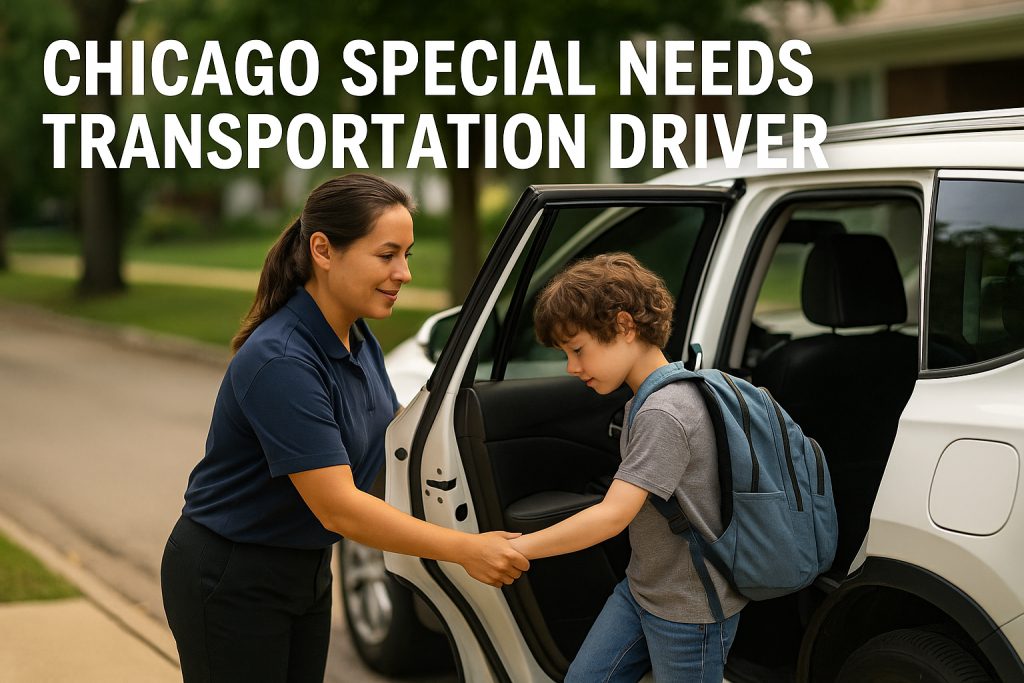
Maria drives the same route through Logan Square every morning at 6:45 AM.
She picks up three kids with IEPs—Emma, who has cerebral palsy and uses a wheelchair; Jordan, who’s on the autism spectrum and needs the same greeting every day; and Liam, who has ADHD and can’t sit still without his fidget toy. Maria knows Emma’s wheelchair securement takes an extra two minutes and that rushing it stresses her out. She knows Jordan needs her to say “Good morning, Jordan. Ready for school?” in the exact same tone. She knows Liam forgot his fidget toy last Tuesday and had a rough ride, so now she keeps a backup in the glove compartment.
The parents call Maria “a lifesaver.” The school calls her “reliable.” Maria calls it “the most important work I’ve ever done.”
This is what Chicago special needs transportation looks like when it actually works—not a bus route with rotating drivers and chaotic schedules, but consistent, trained drivers who understand that for special needs families, transportation isn’t just logistics. It’s the foundation of the entire school day.
And right now in Chicago, that foundation is crumbling. According to Chalkbeat Chicago, as of September 2024, more than 2,200 students with disabilities were still waiting to be routed by Chicago Public Schools. The district has struggled for years with driver shortages, vendor issues, and overwhelming demand—leaving thousands of families scrambling to find Chicago special needs transportation they can actually count on.
This guide is for parents navigating that crisis, and for anyone in Chicago considering becoming a driver who fills this critical gap. Because when CPS can’t deliver, private Chicago special needs transportation becomes the difference between a child getting to school or staying home.
The Chicago Special Needs Transportation Crisis: What Parents Are Facing
If you’re a parent of a special needs child in Chicago, you already know the system is broken. But here’s the scale of the problem:
As Chicago Public Schools deals with a continued bus driver shortage and skyrocketing requests, more than 1,900 disabled Chicago Public Schools students — about 18% of those in need — still didn’t have bus service as classes began on Monday in August 2024. That’s nearly 2,000 children with IEPs who were legally entitled to transportation under federal law—but had no ride.
The district said 10,051 had been routed, and 1,122 students were receiving temporary compensation as of September 2024, meaning families were given $500/month stipends to arrange their own transport. But as special education advocates noted, many families can’t use these stipends—they don’t have cars, can’t afford rideshares twice daily, or lack the physical ability to transport a child with complex needs.
CPS currently has 715 of the roughly 1,300 drivers it needs, officials said. The district is operating at about 55% driver capacity—and that gap directly translates to kids without rides.
For parents, this crisis means:
- Quitting jobs to drive kids to school themselves
- Paying for private Chicago special needs transportation out-of-pocket
- Keeping kids home because there’s no safe way to get them to school
- Relying on family, friends, or neighbors who aren’t trained for special needs support
- Fighting with CPS for months to get routes assigned
This isn’t just inconvenient. For many families, it’s financially devastating and educationally harmful. And it’s exactly why private Chicago special needs transportation providers have become essential—not as a luxury, but as a necessity.
What Makes Chicago Special Needs Transportation Different from Regular School Transport
Not all Chicago special needs transportation is created equal. Here’s what separates quality special needs transport from standard school bus service:
Same Driver Every Single Day
Standard CPS buses often have rotating drivers due to scheduling, sick days, or turnover. For neurotypical kids, this might be fine. For special needs children—especially those with autism, anxiety, or trauma histories—changing drivers is destabilizing.
Quality Chicago special needs transportation guarantees the same driver daily. Your child builds trust with one person. That person learns your child’s needs, triggers, calming strategies, and routines. Consistency isn’t a perk—it’s the foundation of everything else.
Why this matters for drivers:
If you’re considering becoming a student transportation driver, this consistency is why parents specifically request long-term, committed drivers. You’re not just filling a shift—you’re becoming a trusted part of a child’s daily life.
Training in IEPs, Autism, and Special Needs Protocols
CPS bus drivers receive some training, but many aren’t equipped for the complexity of special needs students. They’re managing 30+ kids on a large bus with tight schedules and limited time.
Quality Chicago special needs transportation drivers are trained specifically in:
- IEP basics (what accommodations mean, how to follow individualized plans)
- Autism spectrum support (sensory needs, communication styles, de-escalation)
- Wheelchair securement and mobility equipment handling
- Behavioral de-escalation techniques
- Emergency protocols for medical needs (seizures, allergies, behavioral crises)
Why this matters for drivers:
This training is what makes you valuable. Parents will pay for Chicago special needs transportation when they know the driver understands their child’s specific needs. And for drivers with backgrounds in healthcare, military, or emergency services, this work is a natural fit because you already understand protocols and responsibility.
Small Groups (1-3 Kids) Instead of Crowded Buses
CPS buses carry dozens of students. For special needs kids, that means:
- Noise overload
- Unpredictable social interactions
- Inability to accommodate individualized needs
- Longer routes with multiple stops
Quality Chicago special needs transportation operates with 1-3 kids per vehicle maximum. This creates:
- A calm, controlled sensory environment
- Space for individualized accommodations (music off, temperature controlled, specific seating)
- Shorter routes with fewer stops
- Driver attention focused on each child’s needs
Why this matters for drivers:
When you’re driving Chicago special needs transportation routes, you’re managing 1-3 students—not 30. This allows you to actually build relationships, remember details, and provide the individualized support that makes the difference.
Flexible Timing and Route Adjustments
CPS buses run on rigid schedules. If your child has a medical appointment or a tough morning, the bus doesn’t wait. If construction blocks the usual route, there’s no advance notice.
Quality Chicago special needs transportation adapts:
- Drivers communicate directly with parents about delays or changes
- Routes can adjust for construction, traffic, or weather
- If a child is having a hard morning, the driver can give extra time
- Parents can reach the driver directly, not just dispatch
Why this matters for drivers:
You have more autonomy. You’re not micromanaged by rigid schedules—you’re trusted to manage routes responsibly while accommodating real-world situations. That flexibility is one reason many part-time drivers with other commitments choose Chicago special needs transportation over traditional bus driving.
Direct Parent Communication
CPS parents often can’t reach bus drivers directly. They go through dispatch, leave messages, and hope information gets passed along.
Quality Chicago special needs transportation includes direct driver-parent communication:
- Text or call updates about pickups, delays, or how the ride went
- Parents can reach the driver if their child had a tough morning
- Drivers share observations (the child seemed upset today, or the child was really happy)
- Real-time problem-solving instead of playing telephone through dispatch
Why this matters for drivers:
This direct communication builds trust faster. Parents aren’t guessing—they’re connected to you. And when parents trust you, they request you specifically, which means consistent work and often referrals to other families.
What Chicago Parents Look for in Special Needs Transportation Providers
If you’re a parent evaluating Chicago special needs transportation options, here’s your checklist. And if you’re a driver, these are the standards you need to meet:
✅ Verifiable Background Checks and Licensing
What to ask:
- “Are all drivers background-checked through the state?”
- “Can I see proof of licensing and insurance?”
- “Do drivers have clean driving records?”
For drivers:
You’ll go through thorough background checks. This is non-negotiable when working with children. If you have a clean record, this process is straightforward. Learn more about what student transportation driver requirements you need to meet.
Red flag for parents:
If a provider resists showing credentials or says “we’ll get to that later,” walk away.
✅ Experience with Special Needs Students
What to ask:
- “What percentage of your drivers have special needs training?”
- “Can you provide references from other special needs families?”
- “Have your drivers worked with students with [my child’s specific diagnosis]?”
For drivers:
Your training and experience matter. Even if you’re new to Chicago special needs transportation, your willingness to learn, patience, and commitment to following individualized plans makes you valuable.
Red flag for parents:
Generic answers like “we’re good with all kids” without specific training or experience.
✅ Curbside Handoff Protocols
What to ask:
- “Do drivers require an authorized adult at every pickup and drop-off?”
- “What happens if I’m running late?”
- “How do you verify authorization?”
For drivers:
You never leave a child unattended. You verify the authorized guardian through the app. If no one’s home, you call dispatch and wait with the child. These protocols exist because children’s safety depends on them.
Red flag for parents:
Any answer involving leaving your child on the porch or dropping them without direct handoff.
✅ Vehicle Safety and Cleanliness
What to ask:
- “Can I see the vehicle before committing?”
- “How are car seats and wheelchair equipment secured?”
- “Is the vehicle regularly inspected and maintained?”
For drivers:
Your vehicle needs to be safe, clean, and organized. Parents are trusting you with their most vulnerable child—your car needs to reflect that responsibility. This means working seatbelts, no check engine lights, clean interior, and proper securement equipment for any special needs gear.
Red flag for parents:
Cluttered, dirty, or poorly maintained vehicles. If they won’t let you see the vehicle before committing, that’s suspicious.
✅ Backup Plans for Emergencies
What to ask:
- “What happens if the regular driver is sick?”
- “Do you have backup drivers who know my child?”
- “How do you handle unexpected delays or route changes?”
For drivers:
You need to communicate immediately if you can’t make a route. The provider should have backup plans, but your reliability is what makes you valuable. Parents will specifically request drivers who show up consistently.
Red flag for parents:
No clear backup plan, or answers like “we’ll figure it out when it happens.”
Why Chicago Needs More Special Needs Transportation Drivers Right Now
Here’s the reality: Chicago special needs transportation is in crisis not because there aren’t enough families who need it (demand is skyrocketing), but because there aren’t enough qualified drivers willing to do the work.
CPS currently has 715 of the roughly 1,300 drivers it needs, officials said. That’s a 585-driver shortage in the district alone. Private providers are also struggling to recruit enough drivers to meet demand.
This creates an opportunity:
If you’re in Chicago and considering flexible part-time work that actually matters, Chicago special needs transportation is one of the few fields where:
- Demand far exceeds supply (you’ll have consistent work)
- Pay is competitive ($18-$25/hour in Chicago area for trained special needs drivers)
- Hours are flexible (morning routes 6:30-9 AM, afternoon routes 2-4:30 PM)
- The work genuinely impacts families (you’re solving a real crisis)
- You can start relatively quickly (2-3 weeks from application to first route)
What parents need to understand:
The driver shortage means that reliable, trained Chicago special needs transportation drivers are in high demand. If you find a great driver, treat them well—because other families are competing for the same limited pool of qualified people.
What drivers need to understand:
Your work matters more than you might realize. You’re not just driving—you’re the reason a parent can keep their job. You’re the reason a child gets to school calm enough to learn. You’re filling a gap that CPS can’t fill right now.
Real Scenarios: What Chicago Special Needs Transportation Looks Like in Practice
Let’s get specific. Here are actual situations that drivers in Chicago special needs transportation handle regularly:
Scenario 1: Morning route in Pilsen, wheelchair-accessible van
You arrive at 7:15 AM to pick up a 10-year-old with spina bifida who uses a wheelchair. You secure the wheelchair using the tie-down system you were trained on. The child is nonverbal, so you communicate through gestures and their communication device. You drive to a school in Little Village, 15 minutes away. You wait at the school entrance for the aide to come out and assist with handoff. Total time: 30 minutes. You’re paid for the full route.
Scenario 2: Afternoon route in Lincoln Park, sedan
You pick up an 8-year-old with autism from a school in Old Town at 3:00 PM. The child needs the same routine every day: you count to three before starting the car, you take the exact same route down Clark Street, and you don’t ask questions. Today, the child covers their ears when a siren passes. You immediately roll up the windows and turn down the air conditioning fan. By the time you reach their home in Lincoln Park at 3:25 PM, they’re calm. The parent thanks you at the door. Total time: 25 minutes.
Scenario 3: Morning route on the South Side, SUV with two students
You pick up two students: one with Down syndrome from Bronzeville and one with ADHD from Hyde Park. They both attend the same school in Kenwood. The first student needs help buckling their seatbelt. The second student is chatty and wants to tell you about their weekend. You listen, drive carefully, and drop both off at school by 8:15 AM. Total time: 40 minutes.
These are real routes. This is what Chicago special needs transportation drivers do every day. And this is why parents pay for private services when CPS can’t deliver—because drivers like this genuinely understand the children they’re transporting.
How to Find Trusted Chicago Special Needs Transportation (Parent Checklist)
Step 1: Start with referrals
Ask other special needs parents in your school or neighborhood. Facebook groups like “Chicago Special Needs Parents” often have recommendations. Referrals from families with similar needs are gold.
Step 2: Verify credentials
Check background checks, licensing, insurance, and vehicle inspections. Don’t take their word for it—ask to see documentation.
Step 3: Interview the driver
Talk to the actual person who will be driving your child. Ask about their experience, training, and approach to special needs support. Trust your gut—if something feels off, it probably is.
Step 4: Do a trial run
Before committing, arrange a practice ride. Let your child meet the driver, see the vehicle, and take a short test drive. This reduces anxiety and lets you evaluate whether it’s a good fit.
Step 5: Establish clear communication
Get the driver’s direct contact info. Set expectations for daily check-ins. Make sure you can reach them if your child has a tough morning or if plans change.
Step 6: Start with a short-term commitment
Don’t sign a year-long contract upfront. Start with a month or semester. If it’s working well, extend. If it’s not, you’re not locked in.
Why Yuni Rides is Meeting the Need for Chicago Special Needs Transportation
At Yuni Rides, we understand that Chicago special needs transportation isn’t just about getting from point A to point B. It’s about:
✅ Same driver, every day – Your child builds trust with a consistent person
✅ IEP and autism training – Our drivers understand special needs, not just “kids”
✅ Small groups (1-3 students) – Calm, controlled environment
✅ Curbside handoff required – No child is ever left unattended
✅ Direct parent communication – Text or call the driver directly
✅ Flexible scheduling – Morning and afternoon routes that fit your needs
✅ Vehicle safety standards – Clean, maintained vehicles with proper equipment
✅ Backup plans – Clear protocols for substitutes and emergencies
We’re actively recruiting drivers in Chicago because we know the need is overwhelming. If you’re a parent looking for reliable Chicago special needs transportation, contact us to discuss your child’s needs. If you’re someone in Chicago considering meaningful work that pays fairly and fits your schedule, we’d like to talk.
Frequently Asked Questions About Chicago Special Needs Transportation
How much does Chicago special needs transportation cost?
Private Chicago special needs transportation typically costs $20-$40 per one-way ride in the Chicago area, or $200-$400+ per week for daily service. Some families’ IEPs cover costs if CPS can’t provide appropriate transportation.
Will my child’s IEP cover private transportation costs?
Possibly. If CPS can’t provide transportation and it’s written into your child’s IEP, the district may fund private Chicago special needs transportation. You’ll need to advocate for this with your IEP team and potentially file a complaint if CPS refuses.
What neighborhoods does Yuni Rides serve in Chicago?
We serve families across Chicago including Lincoln Park, Logan Square, Pilsen, Hyde Park, Bronzeville, Lakeview, Rogers Park, and surrounding areas. Contact us to confirm coverage for your specific location.
Can my child ride with their sibling?
Often, yes. Many Chicago special needs transportation routes can accommodate siblings, which reduces costs and keeps the routine familiar for your child.
What if my driver is sick?
We maintain backup drivers who are trained and familiar with special needs protocols. You’ll be notified immediately if a substitute is needed, and we prioritize using backups who’ve met your child before when possible.
How quickly can we start service?
Typically 1-2 weeks from initial consultation. We’ll meet with you and your child, do a trial run, and start regular service once everyone is comfortable.
Parents: Need reliable Chicago special needs transportation?
Schedule a consultation with Yuni Rides. We’ll discuss your child’s specific needs and create a transportation plan that works.
→ Contact Us: (415) 535-2155
Interested in autism-specific transportation support?
See our complete guide to autism-friendly school transportation and what makes drivers successful supporting autistic children.
→ Autism-Friendly Transportation Checklist
Looking for special needs transportation services?
Explore how Yuni Rides supports students with IEPs, behavioral needs, and mobility equipment across Chicago.
→ Special Needs Transportation Services
Chicago drivers: Want to help solve this crisis?
If you’re looking for flexible, meaningful work in Chicago, learn how to become a special needs transportation driver.
→ Become a Driver
This is Chicago special needs transportation that actually works: Same driver. Real training. Consistent support.
For parents: The reliability CPS can’t provide. For drivers: Work that matters in a city that needs you.