
Top-Rated Special Needs Transportation: What Parents Should Expect
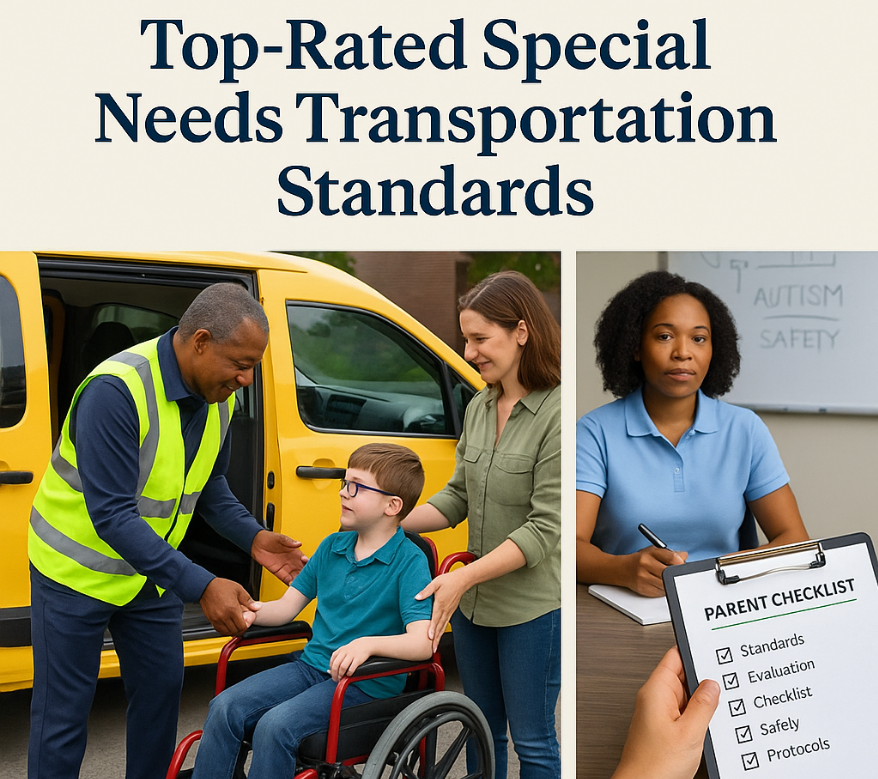
Jennifer pulls up the school transportation company’s website for the third time this week.
She’s read every review. She’s called two references. She’s asked other parents in her son’s IEP support group. Her son Marcus has Down syndrome, and the school district just informed her they can’t provide him with consistent bus service this year—again. They’re offering her a monthly stipend to “arrange alternative transportation,” which sounds simple until you realize what it actually means: finding someone qualified, trustworthy, and trained to transport a child with special needs, every single day, without fail.
Jennifer types “top-rated special needs transportation” into Google. She gets ads, company websites making big promises, and a few scattered reviews. But what she really needs to know is: what makes transportation actually “top-rated” when her child’s safety and wellbeing are on the line?
When you’re searching for top-rated special needs transportation, you’re not just looking for high star ratings or polished websites. You’re trying to figure out what standards actually matter, what questions separate great providers from mediocre ones, and how to ensure your child gets the consistency and care they need.
This guide breaks down exactly what makes top-rated special needs transportation services trustworthy—the non-negotiables, the questions to ask, and how to work with your school district to access services that meet these standards.
What “Top-Rated” Actually Means in Special Needs Transportation
Let’s start with the hard truth: a five-star rating on Google Reviews doesn’t tell you whether a provider can safely transport your nonverbal autistic child or properly secure your daughter’s wheelchair.
According to the California Department of Education’s Special Education Transportation Guidelines, transportation is a related service under IDEA (Individuals with Disabilities Education Act) and must be provided if required to assist a child with a disability to benefit from special education. This means “top-rated” isn’t about luxury or convenience—it’s about meeting legal standards while providing individualized care.
Top-rated special needs transportation delivers on these specific standards:
Same driver consistency.
Your child doesn’t get rotating drivers based on who’s available. They have the same person, every day, who learns their needs, triggers, and routines. Consistency isn’t a perk—it’s fundamental to trust and safety.
Specialized training beyond basic driving.
Drivers understand IEPs, autism spectrum support, behavioral de-escalation, wheelchair securement, and medical emergency protocols. They’re not just “good with kids”—they’re trained professionals.
Small group sizes or one-on-one service.
Your child isn’t on a crowded bus with 30 students. They’re in a vehicle with 1-3 kids maximum, creating a calm, controlled environment where individualized needs can actually be met.
Curbside handoff protocols.
Every pickup and drop-off involves direct handoff with an authorized adult. No child is left unattended, dropped at an empty house, or released to someone not on the authorized list.
Direct parent communication.
You can reach the driver directly—not just corporate dispatch. You get updates when something unusual happens. You can communicate if your child had a rough morning and needs extra patience.
Vehicle safety and cleanliness.
The vehicle is maintained, inspected, and clean. Equipment (car seats, wheelchair tie-downs) is properly installed and used correctly every single time.
Backup plans for emergencies.
If the regular driver is sick, there’s a trained substitute who’s been introduced to your child. If there’s a delay or route change, you’re notified immediately.
These aren’t aspirational goals—these are the baseline standards that separate top-rated special needs transportation from services that are just adequate or, worse, unsafe.
The 7 Standards Top-Rated Special Needs Transportation Providers Meet
When evaluating providers, use this framework. If a service can’t deliver on all seven standards, keep looking.
Standard 1: Trained Drivers Who Understand Special Needs
Why this matters:
Not every driver understands that a meltdown isn’t misbehavior—it’s nervous system overload. Not every driver knows how to communicate with a nonverbal child or recognize when a student with autism is becoming overwhelmed before it escalates.
What top-rated providers do:
Drivers receive training in:
- IEP basics (what accommodations mean, how to follow individualized plans)
- Autism spectrum support (sensory needs, communication styles, de-escalation)
- Behavioral management (how to stay calm and prevent escalation)
- Wheelchair securement and mobility equipment safety
- Medical emergency protocols (seizures, allergies, epi-pen use, respiratory distress)
- Communication with nonverbal or minimally verbal students
Questions to ask:
- “What specific special needs training do your drivers receive?”
- “How often is training updated or refreshed?”
- “Can I speak with the driver who would transport my child about their experience with [my child’s specific diagnosis]?”
Red flag:
Generic answers like “our drivers love kids” or “we’re experienced” without specific training credentials.
For drivers considering this work:
This specialized training is what makes you valuable in top-rated special needs transportation services. Districts and parents will specifically request drivers who understand IEPs and can handle complex needs. That training directly translates to consistent work and often higher compensation. Learn more about what training student transportation drivers receive.
Standard 2: Same Driver, Every Single Day
Why this matters:
Children with autism, anxiety, trauma histories, or developmental delays need predictability. Having a different driver every week—or even every few days—resets the trust-building process and creates unnecessary stress.
What top-rated providers do:
They assign one driver to your child’s route and commit to that consistency. Substitutes are rare, pre-announced, and ideally introduced to your child before the first ride.
Questions to ask:
- “Will my child have the same driver every day?”
- “What’s your driver retention rate? How long do drivers typically stay?”
- “What happens if the regular driver is unavoidably absent?”
Red flag:
Answers like “usually” or “we try to” instead of “yes, guaranteed.”
For drivers:
This is why parents specifically request long-term, reliable drivers in top-rated special needs transportation. When you commit to consistency, you become invaluable. That reliability is what makes veteran drivers particularly valued—they understand showing up when it matters.
Standard 3: Small Groups (1-3 Students Maximum)
Why this matters:
Large groups create noise, unpredictability, and social demands that many special needs children can’t handle. A child with sensory processing disorder can’t regulate in a vehicle with eight kids yelling. A child with behavioral challenges needs individual attention, not crowd management.
What top-rated providers do:
They limit vehicles to 1-3 students maximum, often grouping kids with compatible needs. This creates a calm, controlled environment where the driver can actually attend to each child’s individualized needs.
Questions to ask:
- “How many students will be in the vehicle with my child?”
- “How do you decide which students ride together?”
- “Can you accommodate sensory needs like keeping the environment quiet?”
Red flag:
If they’re putting 6-8 kids in a van and calling it “specialized,” that’s not top-rated special needs transportation—that’s just a smaller bus.
Standard 4: Curbside Handoff (Never Leave Child Unattended)
Why this matters:
According to transportation safety research, news reports increasingly document incidents where children with disabilities are dropped at wrong stops, left on empty buses, or released without proper handoff. These incidents aren’t rare mistakes—they’re system failures that happen when protocols aren’t followed rigorously.
What top-rated providers do:
Every pickup and drop-off requires direct handoff with an authorized adult. The driver verifies authorization (usually through an app or list). If no one is home, the driver calls dispatch and waits with the child—they never leave the child alone.
Questions to ask:
- “What’s your handoff protocol?”
- “How do you verify who’s authorized to pick up my child?”
- “What happens if I’m running late and not at the door?”
- “Have you ever had an incident where a child was left unattended or given to the wrong person?”
Red flag:
Any answer that involves leaving a child on the porch, in a building lobby, or with someone not pre-authorized.
For drivers:
These protocols aren’t optional—they’re what makes top-rated special needs transportation legally compliant and actually safe. Following handoff procedures rigorously is what separates professional drivers from people just giving rides.
Standard 5: Direct Parent Communication
Why this matters:
When your child can’t tell you how the ride went, you need the driver to communicate. Did your child seem upset? Did they have a meltdown? Did something trigger them? This information helps you support your child and gives the driver critical context for the next day.
What top-rated providers do:
Parents have direct access to the driver (via phone or text). The driver proactively shares information: “Marcus had a great morning today,” or “Sarah seemed overwhelmed—I gave her extra time before starting the car.” Communication isn’t limited to problems—it includes positive updates too.
Questions to ask:
- “Can I communicate directly with the driver, or do I have to go through dispatch?”
- “How does the driver update me about how the ride went?”
- “Can I reach the driver if my child has a tough morning and I need to give them a heads-up?”
Red flag:
You can only communicate through corporate dispatch with no direct driver access.
Standard 6: Proper Equipment and Vehicle Safety
Why this matters:
Improperly secured car seats kill children. Incorrectly installed wheelchair tie-downs cause injuries. Vehicles that aren’t maintained break down—often at the worst possible times. Safety isn’t abstract—it’s specific, measurable, and non-negotiable.
What top-rated providers do:
- Vehicles are regularly inspected and maintained
- Car seats and booster seats are installed correctly according to age/weight/height requirements
- Wheelchair tie-downs meet federal safety standards and are used every single time
- Drivers are trained on proper equipment use
- Vehicles are clean and organized (not cluttered with personal items or trash)
Questions to ask:
- “Can I see the vehicle before committing?”
- “How are car seats or wheelchairs secured?”
- “When was the vehicle last inspected?”
- “What happens if the vehicle breaks down during a route?”
Red flag:
Providers who won’t let you inspect the vehicle, or vehicles that appear poorly maintained or cluttered.
Standard 7: Backup Plans and Emergency Protocols
Why this matters:
The regular driver will get sick. Traffic will cause delays. Emergencies will happen. Top-rated special needs transportation services don’t wing it—they have documented protocols for every scenario.
What top-rated providers do:
- Trained backup drivers who’ve met your child (when possible)
- Clear emergency contact procedures (who to call if the driver is delayed, injured, or if the child has a medical emergency)
- Real-time communication during delays or disruptions
- Medical emergency plans (especially for students with seizures, allergies, or respiratory conditions)
Questions to ask:
- “What’s your backup driver plan?”
- “How do you handle medical emergencies?”
- “What happens if there’s a traffic delay or accident?”
- “How quickly will I be notified if something goes wrong?”
Red flag:
Vague answers like “we’ll figure it out” or no documented emergency protocols.
Red Flags That Disqualify a Provider (Even with Good Reviews)
Some warning signs should make you walk away immediately, regardless of star ratings:
❌ “We treat all kids the same.”
Special needs require individualized support. “Same treatment” means no accommodations.
❌ “Your child just needs to adjust.”
Forcing compliance causes trauma. Top-rated special needs transportation adapts to the child, not vice versa.
❌ “We can’t guarantee the same driver.”
Consistency is non-negotiable for special needs students.
❌ Drivers without background checks or special needs training.
If they can’t provide proof of background checks or training credentials, don’t trust them with your child.
❌ No direct parent-driver communication allowed.
If the company forbids direct contact, they’re hiding something or don’t trust their drivers.
❌ Unwillingness to do a trial run.
Reputable top-rated special needs transportation providers will let your child meet the driver and do a practice ride before committing.
How to Access Top-Rated Special Needs Transportation Through Your District
Here’s what most parents don’t realize: you’re not limited to whatever bus service the district offers. Under federal law (IDEA), if the district can’t provide appropriate transportation for your child with an IEP, they’re required to arrange alternatives—often through contracted private providers.
Step 1: Document that district transportation isn’t working.
Keep records of: missed buses, late arrivals, incidents on the bus, your child’s distress, communication with the district that went unresolved.
Step 2: Request an IEP meeting focused on transportation.
Transportation is a related service under IDEA. If the current arrangement isn’t allowing your child to access their education effectively, request a meeting specifically to address it.
Step 3: Advocate for appropriate transportation services.
Present your documentation. Explain why the current bus doesn’t meet your child’s needs. Request that the district arrange transportation through a provider that meets the standards outlined in this guide.
Step 4: Know your rights.
The district may push back, citing budget constraints or claiming current services are “adequate.” Stand firm: federal law requires appropriate transportation, not just any transportation. If needed, bring an advocate or special education attorney to the IEP meeting.
Step 5: Follow up in writing.
After the meeting, send a written summary of what was agreed upon. If transportation changes are approved, make sure they’re documented in the IEP with specificity: who’s providing it, when it starts, what accommodations are included.
For more guidance on advocating through IEP meetings, families often benefit from connecting with local special education advocacy groups or consulting resources from organizations focused on disability rights.
Why Drivers Choose Top-Rated Special Needs Transportation Work
If you’re reading this as a parent, you want to know: who are these drivers? Why do they do this work?
The drivers who excel in top-rated special needs transportation aren’t just looking for any job—they’re looking for work that matters. Many are parents themselves who understand what it’s like to worry about your child’s safety. Some are veterans who miss having a clear mission and find purpose in being someone families count on. Some are retirees or career changers who want flexible hours but also want their work to contribute something meaningful.
And here’s what they consistently say about this work:
“I see the impact I make every day.”
Parents thank them. Kids wave. They’re not processing data or filing reports—they’re directly helping families function. That visibility matters.
“The training gave me skills I didn’t know I needed.”
Many drivers come in thinking “I’m good with kids, I can drive.” Then they learn about IEPs, sensory processing, de-escalation, and emergency protocols, and they realize how much specialized knowledge this work actually requires. That training makes them professionals, not just drivers.
“Parents specifically request me.”
When you become known as a reliable, trained driver in top-rated special needs transportation, families ask for you by name. That recognition—that you’re not interchangeable—means something.
“The schedule fits my life.”
Morning routes (6:30-9:00 AM) and afternoon routes (2:00-4:30 PM) fit around VA appointments, family commitments, or other work. The flexibility combined with meaningful impact makes it sustainable long-term. For more on driver schedules and compensation, see how much school transportation drivers make.
If you’re someone considering driving for student transportation, understanding these standards is critical. Top-rated special needs transportation providers actively recruit drivers who take this work seriously and are willing to be trained properly.
What Makes Yuni Rides Top-Rated
At Yuni Rides, we don’t claim to be “top-rated” because we say so. We meet the standards that actually matter:
✅ Same driver, every day – Consistency guaranteed, not hoped for
✅ Specialized training – IEP support, autism protocols, medical emergency procedures
✅ Small groups (1-3 students) – Calm, controlled environment
✅ Curbside handoff required – No child ever left unattended
✅ Direct parent communication – Parents text or call drivers directly
✅ Vehicle safety standards – Regular inspections, proper equipment use
✅ Backup plans documented – Clear protocols for substitutes and emergencies
We partner with school districts across multiple states to help them fulfill their legal transportation obligations when traditional buses can’t meet students’ needs. If you’re a parent whose child needs reliable, trained top-rated special needs transportation, work with your school’s IEP team to explore district-funded options. If you’re someone considering becoming a driver who meets these high standards, we’d like to talk.
Frequently Asked Questions About Top-Rated Special Needs Transportation
How do I know if a provider is actually “top-rated” or just claims to be?
Ask the seven questions from each standard section above. A truly top-rated special needs transportation provider will have clear, specific answers—not vague reassurances. Check references, do a trial run, and trust your gut.
Can my child’s IEP cover the cost of private specialized transportation?
Yes, if the district can’t provide appropriate transportation and it’s written into the IEP as a related service. Districts are legally required under IDEA to provide transportation that allows students to access their education. Advocate through IEP meetings.
What if my district says they can’t afford private transportation?
Budget constraints don’t override federal law. If your child’s IEP requires specialized transportation and the district can’t provide it, they must arrange alternatives. Document everything and consider bringing an advocate or attorney to IEP meetings if needed.
How long does it take to arrange district-funded specialized transportation?
Typically 2-4 weeks once approved through the IEP process. This includes background checks, driver assignments, vehicle preparation, and trial runs. Plan ahead when possible.
What if the “top-rated” provider my district contracts with isn’t actually meeting standards?
Document issues (missed handoffs, driver inconsistency, safety concerns). Request an IEP meeting to address transportation problems. The district is responsible for ensuring contracted providers meet appropriate standards.
Do drivers in top-rated services need special licenses?
For most private top-rated special needs transportation using passenger vehicles (not large buses), drivers need a clean standard driver’s license, not a CDL. However, they do need specialized training in special needs support, which reputable providers include in onboarding.
Parents: Need help identifying truly top-rated special needs transportation?
Yuni Rides works with districts to provide the consistency, training, and individualized support families need. Contact your school’s IEP team about district partnerships.
→ Contact Us: (415) 535-2155
Want to see our autism-specific approach?
Learn how we support autistic students with sensory accommodations and trained drivers.
→ Autism-Friendly Transportation
Looking for Chicago-area services?
See how we’re helping Chicago families access reliable special needs transportation.
→ Chicago Special Needs Transportation
Drivers: Interested in joining a top-rated team?
Learn how to become a driver who meets these high standards and makes a real difference.
→ Become a Driver
Top-rated special needs transportation isn’t about reviews—it’s about standards that actually protect and support your child.
For parents: Demand these standards. For drivers: Meet them. For districts: Partner with providers who deliver.